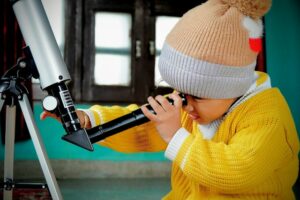
Finding the perfect telescope for a child can be the key to unlocking a lifetime of wonder about the cosmos.
Whether you’re nurturing a budding astronomer or simply looking for a fun, educational gift, choosing the right telescope makes all the difference.
When choosing a telescope for kids, you’ll want to focus on simplicity, durability, and an engaging viewing experience.
Here are some key factors to consider:
- Budget & Quality – Affordable options can still deliver great results—finding the right balance between price and performance is key.
- Ease of Use – A simple setup and intuitive controls ensure kids can start observing the night sky without frustration.
- Magnification & Aperture – Go for a wide field of view and moderate magnification to make locating celestial objects easier.
- Accessories & Learning Resources – Models with star charts, guided software, or simple instructions enhance the experience.
- Sturdy Build – Telescopes designed for children should be tough enough to handle occasional bumps and outdoor use.
- Portability – Lightweight and compact designs make it easier for kids to transport and use their telescope wherever curiosity takes them.
In this guide, we’ll explore some of the best telescopes for kids—ones that balance ease of use, durability, and great viewing experiences.
Note: This post contains affiliate links. If you buy through these links, I may earn a small commission at no extra cost to you. As an Amazon Associate, I earn from qualifying purchases.
Mijiao Kids Telescope: A Fun Introduction to Stargazing
The Mijiao Telescope for Kids is a beginner-friendly refractor telescope designed for young astronomers. It features 90x magnification, a 50mm aperture, and a 360mm focal length, making it a solid choice for lunar and terrestrial observations

Key Features:
- Magnification: Comes with multiple eyepieces and a Barlow lens, allowing up to 90X zoom for detailed observations.
- Tripod & Mount: A stable tripod ensures steady viewing, while the altazimuth mount allows smooth adjustments.
- Portable Design: Lightweight and compact, making it easy for kids to set up and transport.
- Versatile Use: Suitable for astronomy, birdwatching, and landscape viewing
Pros
- Affordable – A budget-friendly option for beginners.
- Compact & portable – Easy to carry for outdoor stargazing
- Decent magnification – 90x zoom allows for lunar and nature observations.
Cons
- Limited aperture – Not ideal for deep-space viewing.
- Basic mount – Lacks advanced tracking features.
Final Thoughts: A Budget-Friendly Entry into the World of Stargazing
This telescope is best suited for kids and beginners who want a simple, easy-to-use option for exploring the Moon and nearby celestial objects.
While it won’t rival professional models, it provides a fun and educational introduction to astronomy at an accessible price.
NASA Lunar Telescope for Kids – A beginner-friendly stargazing experience
The NASA Lunar Telescope for Kids offers a simple, educational and fun way for young astronomers to explore the night sky.
With 90x magnification and beginner-friendly features, this telescope is designed to deliver exciting lunar observations without overwhelming new users.

Key Features:
- 90x magnification – Ideal for viewing craters, ridges, and lunar landscapes.
- Two eyepieces – Provides different levels of magnification for varied viewing experiences.
- Finder scope – Helps kids easily locate and track the Moon.
- Sturdy tabletop tripod – Ensures stable positioning for clear observations.
- Compact design – Lightweight and portable for indoor and outdoor use.
Pros
- Beginner-friendly – Simple setup and operation make it accessible for kids.
- Encourages STEM learning – Great introduction to astronomy and space exploration.
- Affordable – Budget-friendly price point compared to higher-end models.
Cons
- Limited celestial viewing – Best suited for the Moon, not deep-space objects.
- Basic tripod – Works well indoors but may require extra stabilization for outdoor use.
Final Thoughts: A Kid-Friendly Telescope That Makes Moon-watching Magical
The NASA Lunar Telescope for Kids is a top choice for beginners, offering an easy and engaging way to explore the Moon. While it lacks advanced features for deep-space observations, its user-friendly design and educational value make it a great gift for children interested in astronomy.
ESAKO Telescope for Kids & Adults – A Versatile Entry Level Choice
The ESAKO Telescope is a beginner-friendly 70mm refractor telescope designed to make stargazing accessible for kids and novice astronomers alike.
With easy assembly, decent magnification, and helpful accessories, it provides a solid introduction to exploring the night sky.

Key Features:
- 70mm Aperture & Fully Coated Optics – Provides excellent light-gathering ability and enhances image brightness and clarity.
- Multiple Eyepieces & Barlow Lens – Comes with three eyepieces and a Barlow lens that triples magnification up to 150X, allowing for varied viewing experiences.
- Altazimuth Mount & Adjustable Tripod – Offers smooth movement and stability, with a height-adjustable tripod for comfortable positioning.
- Phone Adapter – Enables users to capture images of celestial objects, adding an interactive element to stargazing.
- Easy Assembly – Tool-free setup makes it accessible for beginners.
Pros
- Beginner-Friendly – Simple setup and intuitive controls make it ideal for first-time users.
- Portable Design – Lightweight and easy to transport for outdoor stargazing.
- Decent Magnification – The combination of eyepieces and Barlow lens allows for versatile observations.
- Affordable – A budget-friendly option for entry-level astronomy.
Cons
- Tripod Stability – Some users report that the tripod can be flimsy, leading to shaky views at higher magnifications.
- Limited Deep-Sky Performance – While great for lunar and planetary viewing, it struggles with fainter celestial objects.
- Basic Mount – Lacks advanced tracking features, making it less suitable for long-exposure astrophotography.
Final Thoughts: A Versatile Starter Scope for Curious Minds
The ESAKO Telescope strikes a balance between affordability, usability, and fun. While not suited for deep-space observations, it’s a great pick for families and beginners seeking an engaging introduction to astronomy.
EACONN Telescope For Kids And Beginners – A Fun & Easy Way to Explore the Night Sky
The EACONN Telescope for Kids and Beginners is a solid entry-level option for young astronomers and those new to stargazing. Here’s a breakdown of its strengths and limitations:

Key Features:
- 80mm Aperture & 600mm Focal Length: Offers decent light-gathering ability for viewing the Moon, planets, and bright deep-sky objects like the Orion Nebula.
- Fully Coated Optics: Enhances image brightness and clarity, reducing glare.
- Altazimuth Mount: Simple to use for beginners, though not ideal for tracking celestial objects over time.
- Accessories: Typically includes two eyepieces, a 3x Barlow lens, a diagonal mirror, a smartphone adapter, and a backpack for portability.
Pros
- Beginner-Friendly Setup: Easy assembly with intuitive controls.
- Portable Design: Lightweight and comes with a carry bag—great for stargazing on the go.
- Smartphone Adapter: Lets users capture photos of the Moon and planets, adding a fun, interactive element for kids.
Cons
- Tripod Stability: The included tripod is often cited as flimsy, which can lead to shaky views—especially at higher magnifications.
- Barlow Lens Quality: The 3x Barlow may degrade image sharpness; many users recommend skipping it for better clarity.
- Limited Deep-Sky Performance: While fine for lunar and planetary viewing, it struggles with fainter objects due to its aperture size.
Final Thoughts: Great for First-Time Stargazers
This EACONN telescope for Kids and Beginners balances affordability, usability, and decent optical performance, making it a great starter telescope for kids and beginners.
BRESSER Children’s Astronomic Refractor – A Top Pick for Kids & Astronomy Beginners
The BRESSER Children’s Astronomic Refractor is ideal for children aged 8 and up. A compact and beginner-friendly telescope, it’s designed to introduce young astronomers to the wonders of the night sky.
With a 70mm aperture and 400mm focal length, it provides bright and clear images, making it an excellent choice for kids and beginners.

Key Features:
- 70mm aperture – Captures more light for sharper celestial views.
- 400mm focal length – Ideal for lunar and planetary observations.
- Fully coated optics – Enhances image clarity and reduces glare.
- Altazimuth mount – Allows smooth movement for easy tracking.
- Portable design – Comes with a backpack for convenient transport.
- Great Accessories – Including Smartphone holder. Easy to get started with astrophotography.
Pros
- Beginner-friendly – Simple setup and intuitive controls.
- Good magnification range – Suitable for lunar and planetary viewing.
- Durable construction – Sturdy materials ensure long-term use.
Cons
- Not ideal for deep-space objects – Best suited for brighter celestial bodies.
- Basic mount – Lacks advanced tracking features.
Final Thoughts: Built for Young Stargazers From a Trusted Name in Optics
The BRESSER Children’s Astronomic Refractor is a well-rounded entry-level telescope, offering clear optics, easy portability, and a user-friendly design. While it’s not built for deep-space exploration, it’s perfect for observing the Moon, planets, and bright stars.
OYS Children’s Astronomical Telescope – A Fun, Educational First Step into Astronomy
If you’re looking for a beginner telescope to spark your child’s interest in space The OYS Children’s Astronomical Telescope is a top pick for young explorers.
This telescope offers bright lunar views, easy setup, and interactive features. It’s lightweight, portable, and comes with a full set of accessories to make stargazing fun and accessible.

Key Features:
- Optics: Fully multi-coated 70mm lens for bright, clear images.
- Mount: Altazimuth mount with manual controls—easy for kids to use.
- Eyepieces: Includes two eyepieces and a 3x Barlow lens for magnifications up to 150x.
- Accessories: Comes with a phone adapter, backpack, and adjustable tripod.
- Setup: Tool-free assembly—ideal for first-time users.
Pros
- Beginner-friendly: Simple setup and intuitive operation.
- Portable: Lightweight with a carry bag—great for outdoor adventures.
- Smartphone adapter: Adds an interactive element for capturing lunar shots.
- Good optics for the price: Delivers crisp views of the Moon and bright planets.
Cons
- Tripod stability: Some users report it can be a bit shaky at higher magnifications.
- Not for deep-sky: Limited aperture means fainter objects like galaxies are harder to see.
- Barlow lens quality: May reduce image sharpness—best used sparingly.
Final Thoughts: A Fun First Telescope That Sparks Young Imaginations
The OYS telescope is a solid entry-level scope for kids aged 8+ who are curious about the night sky.
It’s not built for serious astrophotography or deep-space exploration, but it’s a fantastic tool for learning the basics and enjoying the Moon, planets, and terrestrial views.
If you’re aiming to inspire a young stargazer, the best telescopes for kids in 2025 combine fun, durability, and easy setup without sacrificing quality.
Whether it’s a compact refractor with lunar lenses or a feature-packed beginner scope with smartphone adapters, each recommendation on this list balances usability and excitement to spark curiosity about the night sky.
Choose the telescope that suits your young explorer—and create unforgettable family stargazing moments!
Pair their telescope with one of these great astronomy books for kids to deepen their curiosity.


What a unique idea for a children’s gift. This is something that any child who loves the sciences and environment will appreciate. I remember I was particularly scientific as a child, but loved it when my dad set up his telescope and showed us all the planets and stars close up. We even viewed a few solar eclipses and a shooting star.
They are pretty fragile though so I am glad to see you can get studier ones aimed at children, as kids can be pretty rough.
Hi Michel,
Thanks very much for your feedback, I really appreciate it. I have similar memories as a child Michel, of the wonder of looking at the moon and planets through my first telescope with my dad. It’s one of of my fondest memories.
Thanks again Michel,
Regards,
Stu