Everything you need to choose the right binoculars and accessories, and enjoy clearer, more comfortable stargazing.
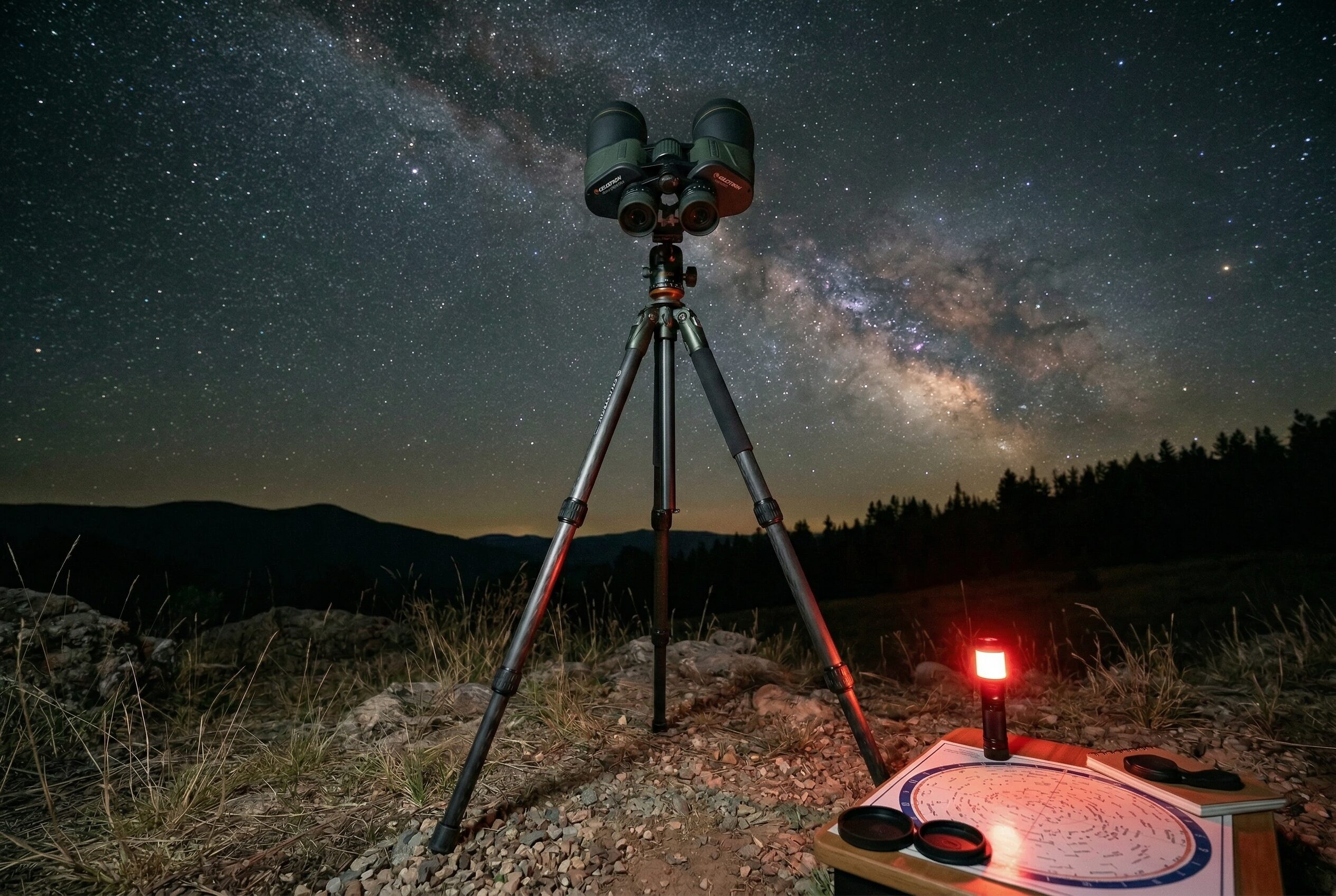
Binoculars are one of the easiest and most rewarding ways to explore the night sky — offering wide, natural views of star fields, open clusters, the Moon, and even brighter galaxies without the complexity of a telescope.
Choosing the right binoculars — and pairing them with the right accessories — can make a dramatic difference to what you’re able to see and how comfortable your observing sessions feel.
In this section, you’ll find practical, beginner-friendly guides covering both astronomy binoculars and the essential accessories that improve stability, clarity, comfort, and convenience at the eyepiece.
From there, you can explore more focused guides on binocular selection, harness systems, mounting solutions, smartphone adapters, and maintenance tools to build a setup that suits your observing style.
No fluff — just practical recommendations to help you get more from every clear night.
TL;DR: Where Should You Start?
New to stargazing? Start with a good pair of 7×50 or 10×50 binoculars, which offer a great balance of brightness and ease of use.
Then explore our Complete Guide to Binocular Accessories for Stargazing to understand what gear is actually worth adding.
Struggling with shaky views? A tripod adapter can dramatically improve stability and make it easier to observe fainter objects. See our guide to the best binocular tripod adapters.
Observing for long periods? A binocular harness helps reduce neck strain and makes sessions more comfortable. Explore our guide to the best binocular harnesses for stargazing.
Want to protect your night vision? A red flashlight allows you to read charts without ruining your dark adaptation. Check out our guide to the best astronomy flashlights.
Interested in simple astrophotography? A smartphone adapter lets you capture basic images of the Moon and bright objects. Take a look at our guide to the best smartphone adapters for binoculars.
Explore All Guides (Topical Index)
The guides below explore some of the best binoculars for astronomy, the most useful binocular accessories, and how they can enhance your stargazing sessions.
Beginner Guides
- Binoculars For Astronomy- A Beginners Guide – Everything you need to know to get started with binocular stargazing, from choosing the right pair to what you can see.
Binocular Buying Guides
- Best Binoculars for Stargazing – Discover the top binoculars for exploring the night sky, with options for every budget and experience level.
- Complete Guide to Binocular Accessories for Stargazing. – Learn which accessories improve comfort, stability, and overall observing performance.
Binocular Accessories
- Best Binocular Tripod Adapters – Secure your binoculars to a tripod for steadier, shake-free views of the night sky.
- Best Astronomy Flashlights – Preserve your night vision with red-light astronomy flashlights designed for stargazing.
- Best Smartphone Adapters for Binoculars – Capture photos of the Moon and objects by connecting your phone to your binoculars.
- Top Binocular Harnesses – Reduce neck strain and keep your binoculars easily accessible during extended observing.
- Best Binocular Cleaning Kits – Keep your lenses clear and dust-free for consistently sharp, high-quality views.
Before You Buy: What You Need to Know
Astronomy binoculars are one of the easiest ways to start exploring the night sky, but a few simple choices can make a big difference to your observing experience.
Popular sizes like 7×50 and 10×50 offer a good balance between magnification and brightness, making them ideal for beginners who want wide, steady views of star clusters, the Moon, and the Milky Way.
Accessories can also greatly improve comfort and stability. A tripod adapter helps keep your binoculars steady for longer observing sessions, while a red flashlight allows you to check charts or adjust equipment without ruining your night vision.
Some observers also use smartphone adapters to capture simple images of the Moon or bright objects through their binoculars. If you’re planning to mount a smartphone for astrophotography, you may also want to explore our guide to the Best Smartphone Tripods for Astrophotography.
The guides below explore some of the best binoculars for astronomy, the most useful binocular accessories, and how they can enhance your stargazing sessions.
Latest ‘Binoculars & Accessories’ Guides
-
Top Binocular Harnesses for Astronomy
When you’re out under a starry sky with your binoculars raised for hours, the last thing you want is neck…
-
Best Astronomy Flashlights (2026 Guide)
When you’re out under the stars, preserving your dark-adapted night vision is a big deal. Ordinary white light instantly…
-
Best Smartphone Adapters for Binoculars
Capturing what you see through binoculars with your smartphone sounds simple – until you try it…
-

Best Binocular Tripod Adapters for Astronomy
Using binoculars for astronomy is a simple and rewarding way to explore the night sky, but holding them steady for…
-
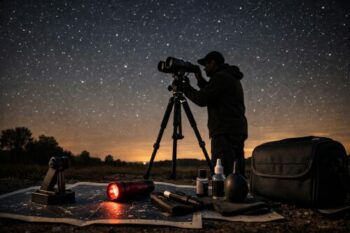
Complete Guide to Binocular Accessories for Stargazing.
If you’ve ever pointed your binoculars up at the night sky and wished the view could be clearer, steadier, or…
-
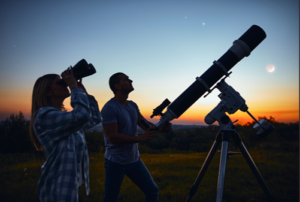
The Best Binoculars For Stargazing In 2026
If your curiosity about the night sky first began with a casual glance through an old pair of binoculars…
Learn More About Using Binoculars for Astronomy
If you’re new to stargazing with binoculars, a little knowledge can go a long way. Unlike telescopes, binoculars offer a wide field of view that makes it easier to find objects in the night sky and learn the layout of constellations.
Many beginners actually find binoculars to be the best starting point for astronomy because they are simple to use, portable, and require no setup.
Learning how to steady your binoculars, adjust the focus correctly, and choose the right observing locations can dramatically improve what you see.
With the right techniques, binoculars can reveal star clusters, the Moon’s surface, bright nebulae, and sweeping views of the Milky Way.
If you’d like to go deeper, explore our beginner guides covering topics such as choosing the best binocular sizes for astronomy, improving stability with tripods, and getting started with simple astrophotography using a smartphone adapter.
Explore More Astronomy Hubs
- Learn Astronomy – Build your knowledge of the night sky with beginner-friendly guides and observing tips.
- Telescopes – Find the best telescopes for beginners and learn how to choose the right one.
- Telescope Accessories – Upgrade your setup with essential accessories for better performance and comfort.
- Astrophotography – Start capturing the night sky with guides on gear, techniques, and setup.
- Gifts & Books – Browse astronomy books, unique gifts and practical ideas for every night sky enthusiast.
Binoculars & Accessories for Stargazing: FAQs
While handheld binoculars are great for quick sky tours, using a tripod adapter can dramatically improve stability — especially with 10x50 or 15x70 binoculars — allowing you to see fainter deep-sky objects with less strain.
Common astronomy binocular accessories include tripod adapters for stability, red flashlights to preserve night vision, harnesses for comfort during long observing sessions, and smartphone adapters for basic astrophotography.
Yes — by attaching a smartphone adapter to your binoculars, you can capture basic images of the Moon and bright star clusters. Stability from a tripod is strongly recommended for best results.
Popular sizes like 7x50 and 10x50 offer a good balance between magnification and field of view, making them ideal for beginners. Larger binoculars such as 15x70 provide brighter views but usually require tripod support.
For many beginners, astronomy binoculars are easier to use than a telescope because they require no setup, provide a wider field of view, and are more intuitive for finding objects in the night sky. Binoculars are ideal for learning constellations and observing the Moon and star clusters before progressing to a telescope.