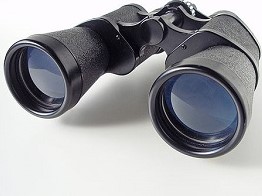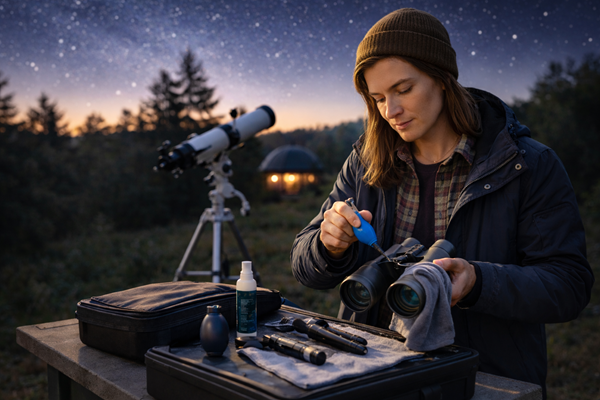
Your binoculars are precision optical instruments — not just outdoor gear. Even a tiny fingerprint, dust particle, or smear can reduce sharpness, contrast, and light transmission, especially on modern multi-coated lenses.
That’s why using the right cleaning kit matters far more than most people realise.
Whether you’re maintaining premium binoculars or a budget pair, this guide compares four binocular cleaning kits to help you choose the right tools for maintaining your optics and keeping your views crisp and clear.
If you’re building your binocular setup, you can explore our complete guide to binoculars and accessories for stargazing to see how cleaning kits fit into your overall kit.
Note: This post contains affiliate links. If you buy through these links, I may earn a small commission at no extra cost to you. As an Amazon Associate, I earn from qualifying purchases.
Quick Verdict — Best Binocular Cleaning Kits
If you just want to find the right kit for your binoculars without reading the full guide, here are our top picks:
Quick Verdict — Best Binocular Cleaning Kits
- Best All-Round Cleaning Kit: K&F Concept 4-in-1 – A versatile combination of an air blower, dual-tip lens pen, and microfibre cloths, making it a strong choice for routine binocular and telescope maintenance.
- Best for Multi-Purpose Optical Cleaning: Celestron Lens Cleaning Kit – Includes lens wipes, cleaning fluid, a microfibre cloth, and a retractable brush for maintaining binoculars, spotting scopes, telescopes, and camera lenses.
- Best Budget Cleaning Kit: Zacro Professional – A budget-friendly option with essential cleaning accessories for everyday lens care.
- Best for Travel and Field Use: Midukit – A portable cleaning kit suited to outdoor observing, camping, and stargazing trips.
If you’re new to astronomy, our beginner’s guide to binoculars for stargazing explains what you’ll need to get started.
If you’re new to astronomy, our beginner’s guide to binoculars for stargazing explains what you’ll need to get started.
Best Binocular Cleaning Kits — Comparison Table
The four kits below offer different combinations of cleaning accessories. Before using any cleaning fluid, wipes, or other products on your binoculars, check that they are suitable for your particular lens coatings and follow the manufacturer’s instructions.
| Cleaning Kit | Main Accessories | Best For |
|---|---|---|
| K&F Concept 4-in-1 | Air blower, lens pen, microfibre cloths | All-round binocular, camera, and telescope cleaning |
| Celestron Lens Cleaning Kit | Retractable brush, 10 lens wipes, cleaning fluid, microfibre cloth, and pouch | Binoculars and other optical equipment |
| Zacro Professional | Air blower, brushes, cloths, and other accessories | Budget-friendly binocular care |
| Midukit | Cleaning accessories for portable use | Travel, camping, and stargazing trips |
Keeping your lenses clean is just as important as choosing the right binoculars – our guide to the best binoculars for stargazing can help you get started.
Binocular Cleaning Buyer’s Guide — What to Look For
Keeping binocular lenses clean isn’t just about appearance — it improves:
- Sharpness and contrast
- Low-light performance
- Optical lifespan
- Overall viewing experience
Here’s a simple checklist to help readers make smarter buying choices:
1. Air Blower First
Always start with dry cleaning — use a blower to remove dust before touching the lens. This prevents scratches.
2. Safe Cloths
Always use microfibre cloths — never tissues, shirts, or napkins. Everyday fabrics can contain grit that scratches optical coatings.
3. Alcohol-Free Cleaners
If cleaning with liquid, choose alcohol-free formulas safe for multi-coated lenses. These protect coatings and prevent fogging.
4. Portable Design
If you use binoculars for stargazing away from home — portability matters. Lightweight kits stand out here. If you’re observing in the field, discovering the top binocular harnesses for astronomy can help keep your gear protected and reduce exposure to dust and dirt.
5. Tool Quality & Variety
More isn’t always better — but a balanced set (blower + pen + cloths + brush) gives flexibility for different cleaning needs.
Best Binocular Cleaning Kits
K&F Concept 4‑in‑1 Cleaning Kit — Best All-Round Choice
Why it’s great
This kit strikes the right balance of performance, quality, and price—making it one of the safest bets for cleaning binoculars, telescopes, and camera lenses.
The powerful air blower removes loose dust before it can scratch delicate coatings, while the dual-tip lens pen tackles fingerprints and smudges without streaking. Finish with the included microfiber cloths and your optics are left crystal-clear.
If you want one kit that does everything well for astronomy gear, this is it

Key Features
- Air blower: Removes loose dust and particles before you wipe the lens.
- Dual-tip lens pen: Helps tackle fingerprints and smudges.
- Microfibre cloths: Useful for carefully cleaning optical surfaces.
- Versatile cleaning tools: Suitable for routine care of binoculars, cameras, and other compatible optics.
- Compact kit: Keeps the essential cleaning accessories together for convenient use.
Pros
- ✔ Excellent all-purpose optics kit
- ✔ Powerful air blower + dual lens pen
- ✔ Safe on multi-coated binocular lenses
- ✔ Great balance of tools and portability
Cons
- ✖ Cleaning fluid bottle is small
- ✖ Not as many accessories as a “pro bundle”
Best for: Everyday users who want a complete, reliable cleaning toolkit.
Celestron Lens Cleaning Kit — Best for Multi-Purpose Optical Cleaning.
Why It’s Great
The Celestron Lens Cleaning Kit is a practical choice for anyone who wants to keep their binoculars clean without buying several separate accessories. Made by a well-known astronomy equipment brand, this compact kit brings together useful cleaning essentials for binoculars, spotting scopes, telescopes, and camera lenses.
It includes a retractable lens brush for removing loose dust, ten individually wrapped lens wipes, lens-cleaning fluid, and a microfibre cloth. The accessories come in a soft carrying pouch with a convenient belt loop, making the kit easy to store and take along on observing sessions.
Rather than offering a large collection of tools, Celestron focuses on a straightforward selection of accessories for routine optical maintenance. This makes it worth considering if you want one compact kit for several pieces of equipment.


Key Features
- Versatile optical cleaning: Designed for binoculars, spotting scopes, telescopes, and camera lenses.
- Retractable lens brush: Helps remove loose dust and debris before wiping.
- Ten individual lens wipes: Convenient for occasional cleaning at home or in the field.
- Lens-cleaning fluid: Provides an additional option for cleaning when dry methods aren’t sufficient.
- Microfibre cloth: Useful for carefully wiping optical surfaces when appropriate.
- Compact carrying pouch: Keeps the accessories together and is convenient to transport.
Pros
✔ Made by a recognised astronomy equipment brand
✔ Suitable for several types of optical equipment
✔ Includes both individual wipes and cleaning fluid
✔ Compact pouch with a convenient belt loop
✔ Useful for home maintenance and outdoor observing
Cons
✖ Doesn’t include an air blower
✖ Offers fewer types of cleaning tools than some larger bundles
✖ Cleaning fluid and wipes must be suitable for your particular optical coatings
Best for: Binocular owners who want a compact cleaning kit from an established astronomy brand, particularly those who also use telescopes, spotting scopes, or camera lenses.
Zacro Professional Cleaning Kit — Best Budget Kit
Why it’s great
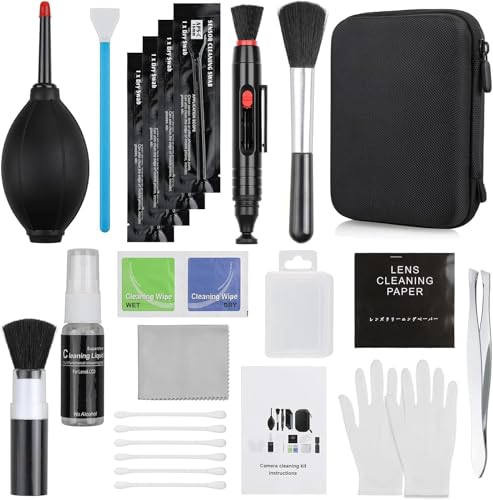
The air blower and soft brush remove loose debris, while the lens pen and microfiber cloths take care of fingerprints and haze. It’s compact enough to keep in your stargazing bag but complete enough for home use.
If you want dependable lens care without a big spend, this is an easy win.
Key Features
- Air blower: Helps remove loose dust without touching the lens.
- Soft cleaning brushes: Help remove debris from optical surfaces and hard-to-reach areas.
- Lens pen: Provides an additional tool for dealing with fingerprints and smudges.
- Microfibre cloths: Help clean compatible optical surfaces when used correctly.
- Budget-friendly design: Offers a selection of basic cleaning accessories for everyday maintenance.
Pros
- ✔ Very affordable
- ✔ Includes all basic lens cleaning tools
- ✔ Great field kit for on-the-go use
- ✔ Compatible with binoculars and other optics
Cons
- ✖ Tool quality varies slightly
- ✖ Smaller cloths than higher-end kits
Best for: Beginners and casual users needing a dependable starter kit.
Midukit Cleaning Kit — Best for Travel & Field Use
Why it’s great
When you’re observing outdoors, you don’t want bulky gear — and this lightweight kit is perfect for quick lens touch-ups.
It includes the essentials: blower, lens pen, cleaning solution, and cloths. That’s everything you need to safely remove dust, dew marks, and fingerprints from binoculars without risking scratches.
A smart choice for star parties, camping trips, and grab-and-go astronomy bags.

Key Features
- Air blower: Helps remove loose dust before cleaning.
- Lens pen: Useful for addressing fingerprints and smudges.
- Cleaning solution: Provides an option for dealing with marks that dry cleaning cannot remove, provided it is suitable for your optics.
- Cleaning cloths: Help wipe optical surfaces carefully.
- Portable design: A practical choice for keeping cleaning accessories in your astronomy bag when travelling or observing outdoors.
Pros
- ✔ Compact and lightweight
- ✔ Excellent for travel or backpacking
- ✔ Comes with blower, pen, and cloths
Cons
- ✖ Not as comprehensive as bigger kits
- ✖ Brushes can be small
Best for: Outdoor enthusiasts and portable optics care.
Keeping your lenses clean is especially important if you’ve invested in high-quality optics — see our Best Binoculars for Stargazing in 2026 guide for the top picks this year.
Why Proper Cleaning Matters for Binocular Coatings
Modern binoculars use optical coatings to improve light transmission, contrast, and image clarity. These coatings are designed for optical performance, but careless cleaning can scratch the lens surface or damage its coatings.
The key is to use appropriate cleaning tools and follow a gentle cleaning routine.
Useful accessories found in binocular cleaning kits include:
- Air blowers: Help remove loose dust and particles before you touch the lens.
- Soft lens brushes: Help dislodge remaining particles without unnecessary rubbing.
- Microfibre cloths: Designed for carefully wiping suitable optical surfaces.
- Lens pens: Can help remove fingerprints and smudges when used according to the manufacturer’s instructions.
- Optical cleaning fluids and wipes: May help remove stubborn marks, provided they’re compatible with your binoculars’ coatings.
Not every kit contains all these accessories, and not every cleaning fluid is suitable for every optical surface. Always check the instructions for your binoculars and the cleaning products you use.
A cleaning kit is just one part of a well-built observing setup — explore the Complete Guide to Binocular Accessories for Stargazing to see how everything fits together.
How Often Should You Clean Binoculars?
Most binoculars don’t need cleaning after every observing session. In fact, unnecessary cleaning can increase the risk of scratching the lenses, particularly if loose dust or grit is rubbed across the optical surfaces.
The best approach is to inspect your binoculars regularly and clean them when you notice dust, fingerprints, smudges, or other contamination that affects your view.
Here’s a simple guide to help you decide when cleaning is necessary:
| Usage or Conditions | Recommended Action |
|---|---|
| Occasional stargazing in dry conditions | Inspect the lenses after use and clean only when necessary. |
| Regular outdoor observing | Check for dust, pollen, and fingerprints regularly. Remove loose particles before wiping. |
| Coastal or dusty environments | Inspect the lenses and body after each outing, as salt and grit can accumulate. Clean when necessary. |
| Exposure to rain, dew, or snow | Dry the exterior carefully and check for moisture. Follow the manufacturer’s instructions before cleaning the lenses. |
| Fingerprints or visible smudges | Clean the affected optical surface when necessary, using suitable cleaning materials. |
A Simple Rule to Remember
Remove loose dust before wiping, and don’t clean your binocular lenses more often than necessary.
Start with an air blower to remove loose particles. If marks remain, use an appropriate lens-cleaning method recommended by your binocular manufacturer.
Remember that the body, eyecups, and exterior surfaces may need different care from the lenses. Always follow the manufacturer’s guidance, particularly after exposure to moisture or salty air.
A good cleaning kit makes routine maintenance easier, but careful technique matters more than having lots of accessories.
Are Binocular Lens Coatings Easy to Damage?
Modern binoculars often use specialised optical coatings to improve light transmission, contrast, and image quality. These coatings are designed for everyday use, but careless cleaning can scratch the lens surfaces or damage the coatings.
The good news is that you don’t need to be afraid of cleaning your binoculars. With the right tools and a little care, routine maintenance is straightforward.
What Can Damage Binocular Lens Coatings?
Some of the most common cleaning mistakes include:
- Wiping away dry dust: Tiny particles can act as abrasives when rubbed across a lens. Remove loose dust with an air blower before wiping.
- Using unsuitable cloths or tissues: Clothing, paper towels, and ordinary tissues may contain fibres or particles that can scratch optical surfaces.
- Applying excessive pressure: Pressing too hard while cleaning increases the risk of scratching the lens.
- Using household cleaning products: Window cleaners and other household chemicals may be unsuitable for optical coatings.
- Using incompatible cleaning fluids: Not every lens-cleaning solution is suitable for every binocular. Check the manufacturer’s recommendations before use.
- Cleaning too frequently: Unnecessary cleaning creates additional opportunities for accidental damage.
How Can You Protect Your Binocular Lenses?
A few simple habits can help keep your optics in good condition:
- Remove loose dust with a suitable air blower before touching the lens.
- Use a clean microfibre cloth or another cleaning accessory recommended for your binoculars.
- Apply only cleaning fluids or wipes that are suitable for your particular optical coatings.
- Use gentle movements and avoid unnecessary pressure.
- Replace lens caps after observing and store your binoculars in a suitable case when not in use.
The key takeaway: Binocular coatings aren’t something to be frightened of, but they do deserve careful handling. A suitable cleaning kit can make maintenance easier, provided you use its accessories correctly and follow the binocular manufacturer’s instructions.
Field Cleaning vs Deep Cleaning
You don’t need to carry out a thorough clean every time you use your binoculars. In most cases, a little routine care is enough to keep the lenses clear while you’re out observing. More thorough cleaning can wait until you get home, if it’s actually needed.
Field Cleaning (While You’re Out Observing)
Field cleaning is about dealing with loose dust, pollen and other surface contamination without accidentally scratching your lenses. It’s particularly useful when birdwatching, stargazing, hiking or observing in dusty conditions.
Useful accessories include:
- Air blower: Removes loose dust and particles without touching the lens surface.
- Soft lens brush: Helps remove particles that remain after blowing, provided the brush is clean and suitable for optical lenses.
- Microfibre cloth: Useful for light cleaning when necessary, but only after loose particles have been removed.
- Suitable lens wipes: Can be convenient when you’re away from home, provided they’re specifically suitable for your binoculars’ optical coatings.
The goal: Remove loose contamination safely and avoid rubbing particles across the lens. If your binoculars become wet or covered in grit, don’t rush to wipe them clean. Follow the manufacturer’s care instructions instead.
Deep Cleaning (At Home)
A more thorough clean may be needed when you notice fingerprints, oily marks or stubborn smudges that routine dust removal won’t shift. You shouldn’t need to do this after every observing session.
Useful accessories include:
- Air blower: Removes loose dust before you touch the lens.
- Optical cleaning fluid: Use a product recommended by your binocular manufacturer, rather than assuming any lens cleaner will be suitable.
- Clean microfibre cloth: Helps remove smudges when used gently and correctly.
- Lens-cleaning tools: A suitable lens pen or other purpose-made accessory may be useful, depending on the type of contamination and the manufacturer’s advice.
The goal: Remove fingerprints and smudges without scratching the lens, damaging its coatings or leaving residue. Use only the amount of cleaning fluid recommended by the product instructions, apply minimal pressure and avoid unnecessary repeated wiping.
Which Approach Should You Use?
For most binocular owners, field cleaning should be occasional and gentle, while deeper cleaning should be reserved for when it’s genuinely needed. A compact kit with an air blower and suitable cloth can cover many routine situations, while a more comprehensive kit may offer extra options for stubborn marks.
Remember that cleaning kits vary in their contents. Before buying one, check which accessories are included and make sure any fluids, wipes or cleaning tools are compatible with your binoculars.
Common Binocular Cleaning Mistakes (That Ruin Optics)
Even good-quality binoculars need a little care to keep their lenses performing at their best. Fortunately, avoiding a few common cleaning mistakes can help protect the lens surfaces and coatings for years to come.
Here are the main things to avoid when cleaning your binoculars.
1. Wiping Dust Away Without Removing It First
This is one of the most important mistakes to avoid. Tiny particles of dust, grit or sand can scratch a lens if they’re rubbed across its surface.
What to do instead: Use a suitable air blower to remove loose particles before wiping. If grit remains, don’t rub the lens; follow the binocular manufacturer’s cleaning instructions.
2. Using Your Shirt, Paper Towels or Ordinary Tissues
Clothing, paper towels and ordinary tissues aren’t designed for delicate optical surfaces. They may contain fibres or trapped particles that can leave marks or scratch a lens.
What to do instead: Use a clean microfibre cloth or another cleaning accessory recommended for your binoculars. Keep the cloth free from dust and grit, and replace or wash it when necessary according to its care instructions.
3. Breathing Directly onto the Lens
Breathing onto a lens to create moisture might seem like a convenient way to loosen a smudge, but it can leave marks and isn’t a substitute for proper lens-cleaning methods.
What to do instead: Remove loose dust first, then use a suitable optical cleaning product if needed. Follow the manufacturer’s instructions for your binoculars and the cleaning product.
4. Using Household Glass Cleaners
A household window or glass cleaner may contain ingredients that aren’t suitable for binocular lens coatings or other optical components.
What to do instead: Choose a cleaning fluid or wipe specifically recommended for your binoculars. Don’t assume that a product suitable for household glass is also suitable for optical lenses.
5. Using Compressed Air Cans Carelessly
Some canned-air products can release propellant or liquid residue if used incorrectly, potentially contaminating or damaging optical surfaces. Strong airflow can also be unsuitable for delicate components.
What to do instead: A hand-operated air blower designed for optical equipment is a safer choice for removing loose dust. Avoid directing forceful air into the binocular body or moving parts.
6. Pressing Too Hard While Cleaning
Even a suitable microfibre cloth can cause problems if you press hard against a lens, particularly when particles remain on the surface.
What to do instead: Remove loose dust first and use gentle movements with minimal pressure. Let a suitable cleaning product do the work rather than scrubbing stubborn marks.
7. Cleaning Your Binoculars Too Frequently
It can be tempting to clean your lenses after every observing session, but unnecessary cleaning creates more opportunities for accidental scratches or other damage.
What to do instead: Inspect your binoculars after use and clean the lenses when dust, fingerprints or smudges genuinely need attention. Replace the lens caps and store the binoculars properly between sessions.
The Golden Rule
Remove loose dust before wiping, use only suitable cleaning products, and never rush the process. A good binocular cleaning kit can make maintenance easier, but careful technique matters just as much as the accessories you choose.
Final Thoughts — Choosing the Right Binocular Cleaning Kit
Keeping your binoculars clean doesn’t have to be complicated, and you don’t need an expensive collection of accessories to look after them properly. The key is to remove loose dust safely, deal with fingerprints and smudges when necessary, and use cleaning products that are suitable for your binoculars.
The best cleaning kit for you will depend on how you use your binoculars and which accessories you prefer to have available.
- K&F Concept 4-in-1 is worth considering if you want a versatile collection of tools for routine optical maintenance.
- Zacro Professional is an option to explore if you’re looking for a budget-friendly cleaning kit for everyday use.
- Midukit may suit you if portability is a priority and you’d like a kit to take on outdoor adventures or stargazing trips.
- Celestron Lens Cleaning Kit is worth considering if you want a selection of cleaning accessories for binoculars and other optical equipment, including telescopes, spotting scopes and camera lenses.
Before choosing, check the kit’s contents and make sure its cleaning products are compatible with your binoculars. A kit with more accessories isn’t necessarily better if you won’t use them.
Above all, remember that careful cleaning matters more than having lots of equipment. Remove loose particles before wiping, use gentle techniques, and clean your lenses only when needed. With a little care and the right tools, you can help keep your binoculars in good condition and enjoy clear views for years to come.
Frequently Asked Questions
Yes, many camera lens cleaning kits can also be suitable for binoculars, provided their cleaning accessories and products are compatible with your binoculars' optical coatings.
Look for useful items such as an air blower, a clean microfibre cloth and suitable lens-cleaning tools. Before using any cleaning fluid or pre-moistened wipe, check the binocular manufacturer's recommendations.
Don't assume that every product designed for camera lenses is automatically suitable for every pair of binoculars.
There's no need to clean your binocular lenses after every observing session. Instead, inspect them regularly and clean them when you notice dust, fingerprints or smudges that affect your view.
If you use your binoculars outdoors frequently, you may need to clean them more often, particularly after exposure to dusty or coastal conditions. Always remove loose particles before wiping the lenses, and avoid unnecessary cleaning.
Start by removing loose dust with a suitable air blower. If particles remain, follow your binocular manufacturer's cleaning instructions rather than rubbing the lens.
For fingerprints and smudges, use a clean microfibre cloth and, if necessary, a compatible optical cleaning product. Work gently, avoid excessive pressure and never use a cloth that may contain grit or other abrasive particles.
Always follow the manufacturer's instructions for your particular binoculars.
They can be, provided the cleaning fluid is suitable for your binoculars' optical coatings and is used according to its instructions.
However, not all cleaning solutions are compatible with every optical surface. Check your binocular manufacturer's recommendations before applying a fluid or wipe, and avoid household glass cleaners unless the manufacturer specifically confirms they are suitable.
It's best to avoid ordinary household glass cleaners, paper towels, ordinary tissues and clothing when cleaning binocular lenses. These may contain ingredients or particles that are unsuitable for delicate optical surfaces.
Instead, use a clean microfibre cloth and cleaning accessories designed for optical equipment. Remove loose dust before wiping, and choose cleaning fluids or wipes that are compatible with your binoculars.