Exploring the cosmos has never been more exciting. Whether you’re a seasoned stargazer or just beginning your journey into the night sky, these six great astronomy books offer fascinating insights into celestial wonders, space exploration, and the latest astronomical discoveries.
From practical guides to breathtaking imagery, this list will help you navigate the stars and expand your cosmic curiosity.
Note: This post contains affiliate links. If you buy through these links, I may earn a small commission at no extra cost to you. As an Amazon Associate, I earn from qualifying purchases.
‘Turn Left At Orion’
Turn Left at Orion is widely regarded as the go-to guide for anyone starting their journey into amateur astronomy.
Written by astronomer Guy Consolmagno and physicist Dan M. Davis, this book demystifies the night sky with a practical, down-to-earth approach that’s perfect for beginners using small telescopes or binoculars.
The book features hundreds of celestial objects—from the Moon and planets to deep-sky wonders like nebulae and galaxies—organized by season and visibility.
What sets it apart is its realistic eyepiece sketches, showing exactly what you can expect to see through a modest telescope. No Hubble-level expectations here—just honest, achievable stargazing.


Key Features:
- 500+ night sky objects with seasonal guides
- Realistic telescope views and finder charts
- Tips for using telescopes and binoculars
- Covers both Northern and Southern Hemisphere skies
Pros
- Exceptionally beginner-friendly and jargon-free
- Spiral-bound editions are great for field use
- Encourages hands-on learning and star-hopping
- Trusted by educators, families, and astronomy clubs
Cons
- Large format may be less portable for some
- Not activity-based—more of a visual reference than a workbook
‘Webb’s Universe’
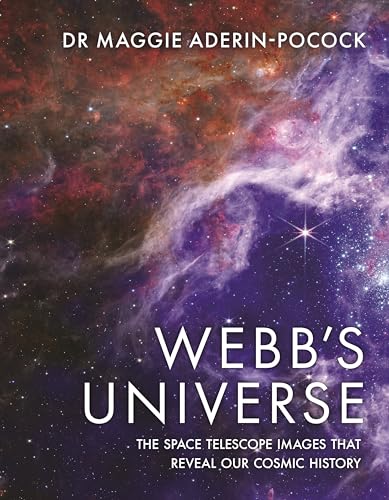
“Webb’s Universe: The Space Telescope Images That Reveal Our Cosmic History” by Dr Maggie Aderin-Pocock is a visually stunning and informative book that showcases the breathtaking images captured by the James Webb Space Telescope.
The book explores the groundbreaking discoveries made by Webb, including never-before-seen cosmic structures, dying stars, and the detection of crucial carbon molecules that form the foundation of life.
Dr. Aderin-Pocock, a renowned space expert, provides insightful explanations of the telescope’s findings, breaking down the science behind each image in an accessible way.
The book has been praised for its engaging writing style and depth of knowledge, making it a must-read for astronomy enthusiasts
Key Features:
- Dozens of full-colour JWST images with expert explanations
- Covers stellar nurseries, galaxies, exoplanets, and cosmic phenomena
- Written by a leading UK space scientist and broadcaster
- Ideal for readers aged 10+ and adults alike
Pros
- Makes complex astronomy accessible and engaging
- High production value—perfect as a gift or educational resource
- Includes up-to-date discoveries and Webb’s scientific mission
Cons
- Focuses on imagery and commentary—less technical detail for advanced readers
- UK-centric perspective may differ slightly from US-based astronomy text
‘The Astronomy Handbook’
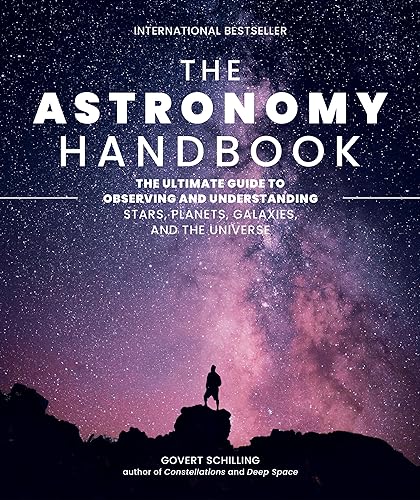
“The Astronomy Handbook: The Ultimate Guide to Observing and Understanding Stars, Planets, Galaxies, and the Universe” by Govert Schilling is a comprehensive guide for amateur astronomers.
It covers a wide range of topics, including stars, constellations, planets, comets, eclipses, galaxies, black holes, and exoplanets.
The book provides practical advice on how to locate celestial objects, use telescopes and cameras, and even photograph space phenomena. Schilling also delves into the history of astronomy, explaining concepts like dark matter, gamma-ray bursts, and extraterrestrial life.
Readers appreciate its accessible writing style and detailed explanations, making it an essential reference for anyone interested in exploring the cosmos.
Key Features:
- Covers stars, planets, galaxies, eclipses, and more
- Practical advice on observing and photographing the night sky
- Clear explanations of complex topics like dark matter and gamma-ray bursts
- Includes a brief history of astronomy and current discoveries
Pros
- Ideal for beginners and intermediate stargazers
- Written by a trusted astronomy communicator
- Great balance of theory and hands-on guidance
- High-quality hardcover edition with 256 pages of content
Cons
- Not activity-based—more of a reference than a workbook
- Focused on Northern Hemisphere observers
‘Under Alien Skies’
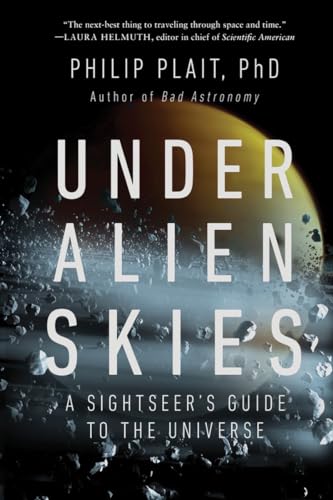
“Under Alien Skies: A Sightseer’s Guide to the Universe” by Philip Plait is a thrilling cosmic tour that takes readers on an imaginative journey through space.
Plait, known as the “Bad Astronomer,” blends scientific accuracy with vivid storytelling, transporting readers to ten breathtaking locations across the universe.
The book explores what it would be like to stand on alien worlds, from hovering above Saturn’s rings to falling into a black hole.
Plait’s humour and enthusiasm make complex astronomical concepts accessible and engaging, offering a fresh perspective on the wonders of space.
Readers praise the book for its immersive descriptions, scientific depth, and sense of adventure, making it a must-read for space enthusiasts
Key Features:
- Ten immersive chapters exploring planets, moons, stars, and galaxies
- Scientifically accurate yet accessible explanations
- Realistic descriptions of what you’d see, feel, and hear on alien worlds
- Infused with Plait’s trademark wit and enthusiasm
Pros
- Perfect for space lovers, sci-fi fans, and curious mind
- Makes complex astronomy feel personal and tangible
- Great for teens and adults alike—no prior science knowledge needed
Cons
- Not a traditional stargazing guide—more of a cosmic travelogue
- Some readers may crave more visuals to match the vivid prose
Stargazing For Beginners
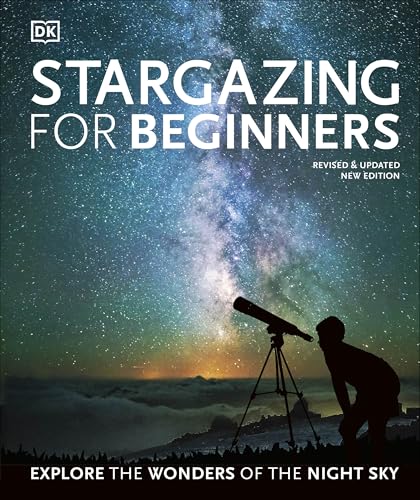
“Stargazing for Beginners: Explore the Wonders of the Night Sky” by Will Gater is a comprehensive guide to observing and understanding the night sky.
It covers practical stargazing techniques, helping readers recognize celestial objects and track their movements throughout the night and year.
The book provides step-by-step instructions on using binoculars and telescopes, as well as tips for photographing space phenomena.
Readers appreciate its accessible explanations, detailed charts, and atlas of the night sky, making it a valuable resource for beginners.
Key Features:
- Covers basic astronomy concepts and celestial mechanics
- Step-by-step guides for using binoculars and telescopes
- Tips for observing constellations, planets, and deep-sky objects
- Includes a star atlas for year-round stargazing
Pros
- Clear, jargon-free explanations for beginners
- Ideal for both Northern and Southern Hemisphere observers
- Encourages hands-on learning and outdoor exploration
Cons
- More of a reference guide—lacks interactive activities
- Some readers may prefer a more compact, portable format
‘The NASA Archives’
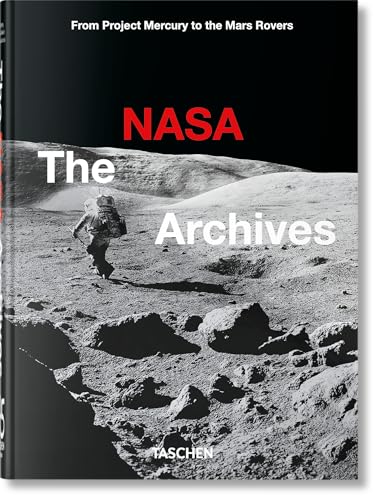
“The NASA Archives: 40th Edition” by Piers Bizony, Andrew Chaikin, and Roger Launius is a visually stunning and historically rich collection that chronicles NASA’s journey from its early days to its modern space explorations.
The book features over 500 historic photographs, rare concept renderings, and remastered images, offering a comprehensive pictorial history of the U.S. space program.
Readers praise its high-quality visuals, detailed storytelling, and insightful commentary from renowned space historians. The book covers NASA’s major milestones, including the Apollo moon landings, Mars rover missions, and Hubble Space Telescope discoveries.
It’s described as a must-have for space enthusiasts, providing a deep dive into NASA’s legacy and future ambitions
Key Features:
- 468 pages of high-resolution NASA imagery and rare documents
- Covers 60 years of spaceflight history, from 1947 to the present
- Includes iconic moments like Apollo 11, Hubble, and the ISS
- Commentary by leading space historians and NASA insiders
Pros
- Museum-quality visuals and production
- Ideal for collectors, educators, and space enthusiasts
- Includes historical speeches and astronaut reflections
- A powerful blend of science, storytelling, and inspiration
Cons
- Large and heavy—more suited for display than casual reading
- Focuses primarily on NASA; limited coverage of international space programs
Looking up at the night sky to explore the universe can be a great experience, but why stop there? — we can deepen our understanding of what’s out there through great books. Whether you’re a seasoned astronomer or just beginning your journey, these six books will fuel your curiosity and expand your knowledge of the cosmos.
From practical guides to breath-taking imagery, each book offers a unique perspective on the wonders of space. No matter which one you pick, you’re sure to gain new insights into the celestial marvels above.
Ready to turn inspiration into observation? Discover our top picks for beginner-friendly tabletop telescopes for adults —compact, easy to use, and perfect for exploring the night sky after finishing your latest read.



This list of six must‑read astronomy books for 2025 is absolutely stellar—thank you for compiling it!
I’m on the hunt for a meaningful gift for a friend who’s absolutely passionate about stargazing and space exploration, and this post gives some really inspiring direction.
A few questions to help me choose well:
1. Which of these books would you recommend most for someone who loves both the history of astronomy and the very latest discoveries?
2. Do you happen to know which titles include sky charts, observing tips, or beautiful imagery that a serious amateur astronomer might appreciate?
I’d also love personal stories—has one of these books ever changed your perspective on the universe, or inspired an actual night‑sky observation session?
Thank you so much for sharing these recommendations—I’m excited to pick one that’ll truly light up my friend’s curiosity!
Hi Alice,
Thanks very much for your positive comments on my post, I appreciate it.
As regards your questions Alice, I would be inclined to lean towards “Webb’s Universe” for the very latest discoveries. It has some amazing photos from the equally amazing James Webb Space Telescope.
For something on the history of astronomy I would definitely go for “The NASA Archives” which has great reviews, is a brilliant read and has some stunning photos.
For a great all-rounder Alice, I would go for “Stargazing For Beginners” but from what you wrote I’m thinking your friend may be more an experienced amateur astronomer. In which case you could consider “Turn left at Orion”
I’m sorry Alice, I’ve just realised I probably haven’t narrowed down the list much! All these books have much to offer, but a quick tip… if you click on any of the links that take you to each book on amazon, you can get a preview of the book you’ve clicked on, which is helpful, as are the reviews.
Thanks again for your feedback!
Regards,
Stu
Hey! Do you have any use for a freelance writer? I have nearly a decade of experience and can help with pretty much any type of content, including blog posts, case studies, press releases, thought leadership, articles, and much more. I’m currently looking for new opportunities and would love to see if you have any writing projects I could help with. You can book a time with me to chat if interested. Hoping to connect! https://calendly.com/melottogroup/30min
Hi Hannah,
Thanks for your message. At the moment I don’t need a freelance writer, but if I require one as this website develops further, I would like to keep your details.
Thanks again Hannah, and I wish you luck and lots of work!
Regards,
Stu