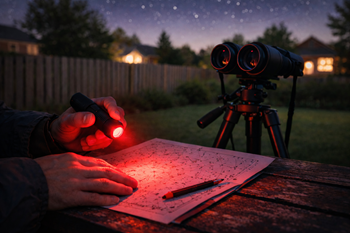
When you’re out under the stars, preserving your dark-adapted night vision is a big deal. Ordinary white light instantly destroys this adaptation, making dim nebulae and faint stars harder to see.
That’s where red light flashlights come in — ideal for reading star charts, adjusting telescopes, setting up gear, or moving around without disrupting your eyesight or others’ observing experiences.
In this guide, we walk through what makes a great astronomy flashlight and highlight four excellent red LED flashlights you can buy right now.
Note: This post contains affiliate links. If you buy through these links, I may earn a small commission at no extra cost to you. As an Amazon Associate, I earn from qualifying purchases.
Quick Verdict
If you just want the best red flashlight for astronomy without reading the full guide, here’s the short answer:
- Best Overall: Carson SL-33 RedSight Pro — purpose-built for astronomy with two brightness modes and excellent night-vision preservation
- Best Budget Pick: HinsGEAR 2-Pack LED Red Light Torches — unbeatable value and perfect for beginners
- Best Rechargeable: DARKBEAM Red Light Tactical Flashlight — USB rechargeable with adjustable focus and brightness
- Best Adjustable Beam: BESTSUN Red Light LED Torch— zoomable beam for chart reading and equipment checks
If you want a simple, reliable red flashlight for stargazing, start with the Carson SL-33 or the HinsGEAR 2-Pack — they cover 90% of amateur astronomy needs.
Quick Comparison – Best Astronomy Flashlights
| Flashlight | Best For | Power | Notes |
|---|---|---|---|
| Carson SL-33 | Classic astronomy | AAA batteries | Dual brightness for chart reading |
| HinsGEAR 2 Pack | Budget & beginners | Standard batteries | Simple, effective red light |
| DARKBEAM Tactical | Rechargeable versatility | USB recharge | Adjustable focus & brightness |
| BESTSUN Red LED | Adjustable beam | Standard batteries | Versatile zoom flashlight |
Why Red Light Matters for Astronomy
When observing the night sky, your eyes adapt to darkness over 20–30 minutes. By using a Red light, with its longer wavelength, you can preserve your adapted night vision.
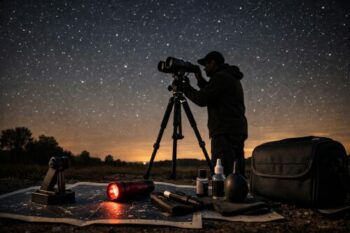
If you’re observing through a telescope, red light is essential for adjusting focus, mounts and eyepieces without ruining your night vision. Also, using the red light once your eyes have adjusted means you can see details on star charts.
Key Benefits of Red Light Flashlights
- Protects night vision — crucial for deep-sky observing sessions.
- Non-intrusive and astronomy-friendly — lets you use charts, phone screens, and knobs without glare.
- Versatile — also great for camping, navigation, and outdoor photography.
If you’re using a telescope at night, a red flashlight makes adjusting focus, mounts and eyepieces far easier. You can discover more of the top telescope accessories for astronomy here.
What to Look for in an Astronomy Red Flashlight
Choosing the right astronomy flashlight isn’t just about colour — it’s about features that genuinely help when you’re under the stars:
1. True Red LED Light
Not all red lights are equal — LEDs around 620–660 nm are ideal for preserving night vision.
2. Brightness & Modes
Some lights are single-mode (simple on/off), while others offer multiple brightness modes or adjustable focus. Beginners usually prefer simpler lights, while advanced observers like adjustable brightness.
3. Power Source
AAA or AA battery options are convenient and widely available, while some compact lights use built-in rechargeable options.
4. Size & Durability
Compact for your pocket or telescope bag, but sturdy enough to handle outdoor conditions.
Top Red Light Flashlights for Astronomy
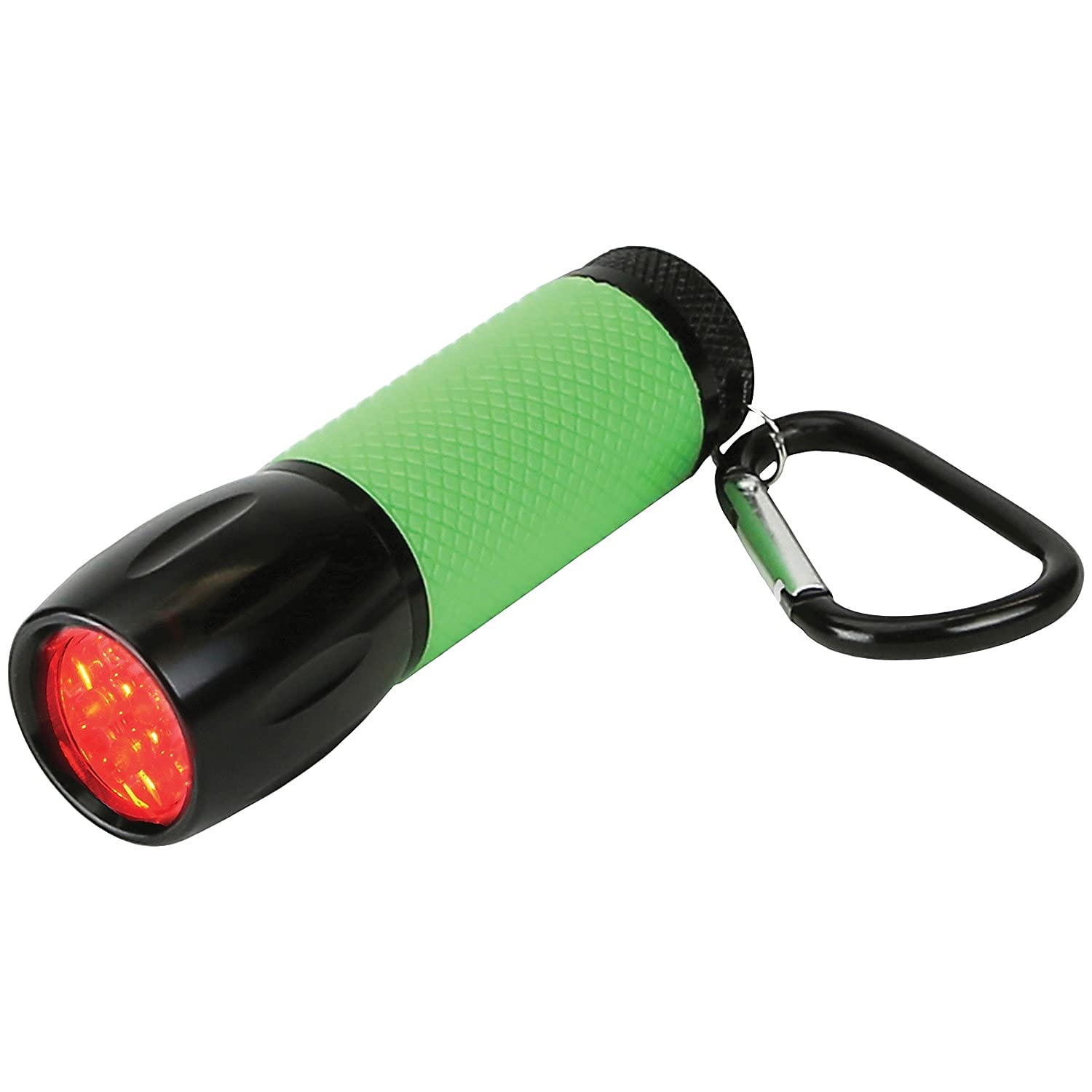
1. Carson SL-33 RedSight Pro – Red Light Torch
A beloved classic among astronomy accessories, this Carson RedSight Pro features two brightness settings and a glow-in-the-dark grip so you won’t misplace it in the dark. Designed specifically for low-light tasks like star map reading, it’s perfect for casual and serious observers alike.
Why it’s great:
- Two brightness levels — more control
- Glow grip and clip for convenience
2. HinsGEAR 2 Pack LED Red Light Torch
A fantastic budget-friendly duo, this 2-pack of simple red LED torches gives you reliable illumination for star chart reading or campsite setup. The single-mode operation makes these perfect for astronomy beginners — no confusing settings or accidental white light!

Why it’s great:
- Excellent value for astronomy kit bags
- Simple and compact — easy to clip on bags or belts
3. DARKBEAM Red Light Torch Tactical LED Rechargeable Flashlight
A rechargeable red light torch with adjustable focus and higher output — good for both astronomy and general outdoor use. Its stepless dimming and zoom feature help you adapt light intensity for different tasks.

Why it’s great:
- Rechargeable — no repeated battery costs
- Adjustable focus for close-up or wider illumination
4. BESTSUN Red Light LED Torch
This affordable red light LED torch combines portability with a zoom-adjustable beam — handy for reading charts or inspecting gear in darkness. Its bright red output still preserves your night vision while giving you more light when needed.

Why it’s great:
- Adjustable focus for versatile use
- Compact and lightweight
Tips for Using Red Flashlights in Astronomy
Start simple: If you’re new to astronomy, a single-mode red light is often easier to use than a complex multi-mode flashlight.
Avoid white light: Even quick use of white light destroys night vision and could cost you views of faint objects.
Keep spare batteries: Even with rechargeables, having backup power ensures your session doesn’t end early.
Final Thoughts
Whether you’re just starting out or putting together a complete star-gazing kit, a quality red flashlight is one of the most useful astronomy accessories you can own.
From compact pocket lights to multi-pack budget options, the products above give you a range of choices to suit every observer’s needs.
Start your astronomy journey with the right light and enjoy unforgettable nights under the stars!
Frequently Asked Questions — Astronomy Flashlights
An astronomy flashlight is a torch that uses red LED light instead of white. Red light allows you to see maps, controls and equipment without ruining your dark-adapted night vision, which is essential for spotting faint stars, nebulae and galaxies.
White light resets your night vision in seconds, making faint objects disappear. Red light affects your eyes much less, so you can look at charts or adjust your telescope while still seeing the night sky clearly.
You can, but it’s not recommended. Even a quick flash of white light can ruin up to 30 minutes of dark adaptation. A red flashlight prevents this and is considered standard equipment at star parties and observatories.
Dimmer is better. A good astronomy flashlight should be just bright enough to read charts and see controls. Models with multiple brightness levels or adjustable focus are ideal because you can reduce light when observing faint objects.
Red phone apps and headlamps can work, but they’re usually too bright and harder to control. A dedicated red flashlight gives you more precise illumination and won’t accidentally switch back to white light.
Rechargeable flashlights like the DARKBEAM are convenient and eco-friendly, while battery models like the Carson SL-33 are lighter and easier to swap in the field. Both work well for astronomy — it comes down to personal preference.