After decades of distant lunar surveys and brief visits, humanity is preparing for a meaningful return to the Moon. NASA’s Artemis lunar observation programme — powered by the Orion spacecraft — goes far beyond simply landing astronauts.
It’s about changing how we study, observe, and understand the Moon.
For scientists, educators, and amateur astronomers alike, Artemis offers new data, better perspectives, and fresh ways to connect observations from Earth with direct measurements from lunar orbit and the surface.
Understanding Artemis and Orion
- Artemis is NASA’s programme to send humans back to the Moon and build a lasting presence in lunar orbit and on the surface. Long-term objectives for Artemis are laying the foundations for the extraction of lunar resources, and eventually making crewed missions to Mars and beyond feasible.
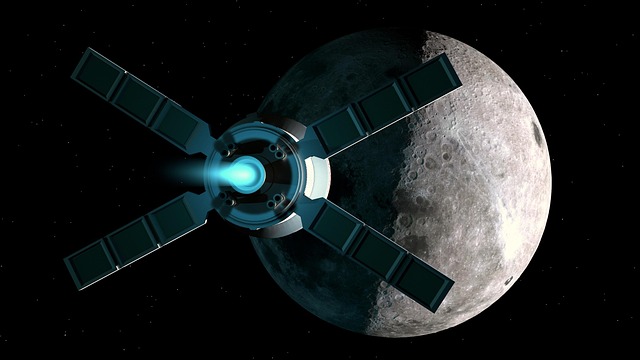
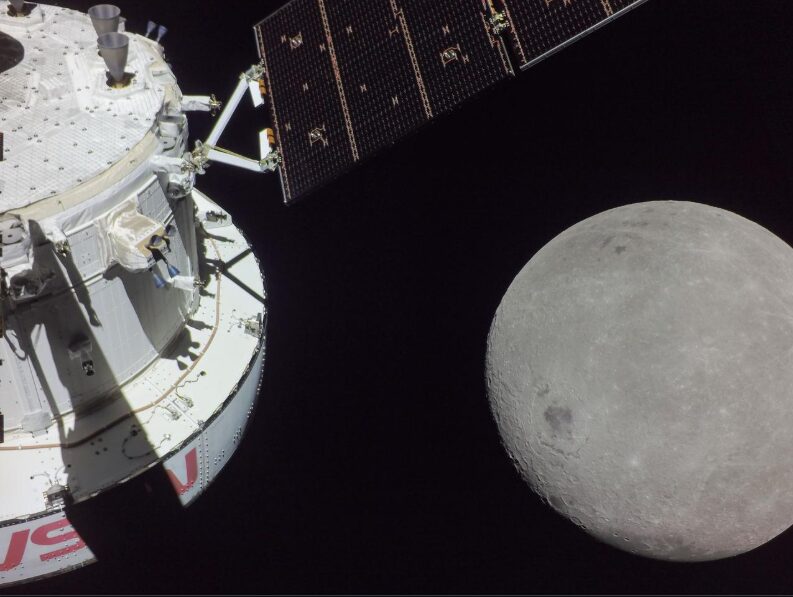
- Orion is the spacecraft that carries astronauts safely to lunar orbit and back. It also carries instruments that collect valuable data for lunar science and observation.
Several missions have already been announced. Here are details of the first three.
Artemis I, already completed, was an uncrewed test flight. Artemis II will carry astronauts around the Moon, and Artemis III aims to land humans on the lunar surface—specifically the South Pole.
Artemis I (Launched November 2022)
- Type: Uncrewed lunar orbital test
- Purpose: Tested the Space Launch System (SLS) rocket and Orion spacecraft in deep space.
- Highlights:
- 25-day mission orbiting the Moon.
- Validated systems for future crewed flights.
- Travelled ~1.3 million miles before splashing down in the Pacific.
Artemis II (Planned for April 2026)
- Type: Crewed lunar flyby
- Crew: 4 astronauts.
- Purpose: First human flight aboard SLS and Orion; tests life support, navigation, and safety systems.
- Highlights:
- 10-day mission looping around the Moon.
- No landing—just a “free-return” trajectory back to Earth.
Artemis III (Planned for mid-2027)
- Type: Crewed lunar landing
- Crew: 4 astronauts; 2 will descend to the Moon’s surface.
- Purpose: First human landing on the Moon since Apollo 17, targeting the lunar South Pole.
- Highlights:
- 30-day mission.
- Uses SpaceX’s Starship Human Landing System.
- Focus on science, exploration, and preparing for Mars.
Together, these missions will reshape lunar exploration and open new doors for both professional researchers and passionate sky-watchers on Earth.
New Tools and Data for Observing the Moon
High-resolution orbital mapping
Artemis missions will deliver clearer, more detailed images of the lunar surface than ever before.
These new maps will help scientists and amateurs alike study small craters, boulders, and slopes, improving existing lunar maps used by observers worldwide.
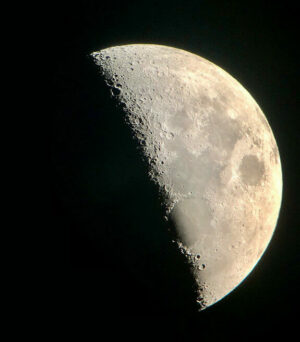
Amateur observers can use Artemis imagery to complement their own observations — for example, by using telescopes or binoculars to spot lunar craters and boulders.
Tracking Lunar Changes Over Time
With Artemis missions operating in lunar orbit and on the surface for long periods, scientists can now watch how the Moon changes over time.
They’ll be able to study short-lived flashes or “transient lunar phenomena,” temperature shifts between lunar day and night, and even how dust and rocks move after tiny meteoroid impacts.
By combining Artemis data with telescope observations from Earth, researchers can build a much more complete picture of how the Moon evolves.
New Spectroscopic and Radar data
New instruments on Orion-linked spacecraft and lunar landers will help scientists look below the Moon’s surface.
Spectrometers will show which minerals and ices are present, while radar systems will reveal hidden layers beneath the regolith.
This will help confirm the presence of water ice in shadowed craters and improve our understanding of the Moon’s geology and history.
Faster Communication and Data Sharing
Artemis includes a network of relay satellites that will transmit data from the Moon to Earth much faster.
This means scientists — and even citizen scientists — will have quicker access to detailed information. More timely data means better collaboration and more opportunities for coordinated observations between Earth and the Moon.
How Lunar Science Will Benefit
- Better landing site selection: High-resolution imagery and surface data will help identify safe and scientifically interesting landing sites.
- Understanding lunar activity: Long-term monitoring will reveal how dust, rocks, and gases behave under sunlight and impacts.
- Mapping resources: Improved spectroscopy and radar will refine maps of minerals and potential resources — valuable for both research and future missions.
What Amateur Astronomers and Educators Can Expect
- Richer context for observations: Amateur images and timing of lunar events can be compared with Artemis data to verify or explain unusual flashes or shadows.
- Citizen science projects: Quicker public data releases will allow schools and astronomy clubs to participate in projects such as image classification or surface-change tracking.
- Improved observing opportunities: Knowing where Artemis missions are operating will help observers plan sessions that align with active areas of exploration.
Real-World Examples of Lunar Collaboration
- Lunar flash tracking: A backyard astronomer spots a bright flash near the Moon’s edge. Artemis data helps scientists confirm whether it was a meteoroid strike or spacecraft activity.
- Measuring lunar heat: Combining temperature data from Artemis instruments with infrared observations from Earth improves models of how the Moon stores and releases heat.
- Searching for polar ice: While Artemis maps possible ice deposits, amateur observers can study light and dust around polar regions to provide supporting data.
New Technology Inspired by Artemis
Many technologies developed for the Artemis lunar observation program — such as compact spectrometers, advanced cameras, and high-speed communications — will soon be available for universities and amateur astronomers.
These tools will make high-quality observation more accessible, allowing small teams to collect data once limited to major space agencies.
The Challenges Ahead
- Access to data: Some Artemis data might not be released right away, as it will first be used for mission planning. This could temporarily limit public participation.
- Increased lunar traffic: More spacecraft near the Moon means greater need for coordination to avoid interference and ensure smooth communication.
- False signals: Human activity could create reflections or flashes that look like natural lunar events. Careful data comparison will be needed to tell them apart.
Building a Collaborative Lunar Observation Future
Artemis and Orion are not replacing Earth-based observation — they are enhancing it. The greatest progress will come from collaboration: amateur astronomers providing wide-area monitoring, while Artemis missions deliver close-up data.
Together, they can create a global network that links classrooms, observatories, and missions in one shared effort to study the Moon.
The return of Orion marks the beginning of a new era in lunar observation — one with richer data, faster communication, and unprecedented cooperation.
Whether you’re a scientist, student, or casual sky-watcher, Artemis opens the door to explore our closest neighbour in ways we’ve only dreamed of before.
You can see and read more on the Artemis programme at the NASA website