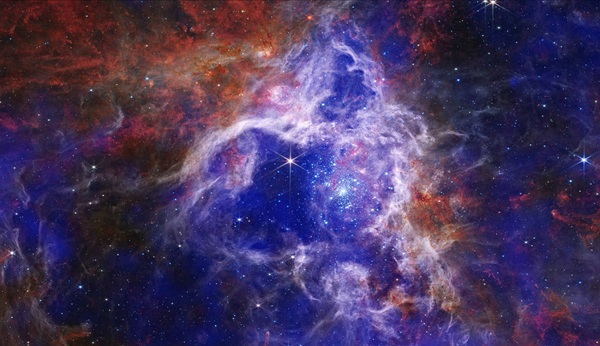
If you’ve ever seen a stunning image of colourful clouds floating among the stars, you’ve probably been looking at a nebula.
A nebula is a vast cloud of gas and dust in space. Some nebulae are regions where new stars are born, while others are the remains of stars that have reached the end of their lives. These enormous cosmic structures play a crucial role in the life cycle of stars, helping to shape the galaxies they inhabit.
Nebulae are among the most beautiful objects in astronomy. They can stretch across dozens or even hundreds of light-years and contain enough material to create thousands of stars.
Understanding what nebulae are is one of the first steps in learning how the universe works.
TL;DR – Quick Answer: What Is a Nebula in Space?
A nebula is a giant cloud of gas and dust in space. Nebulae can be the birthplace of new stars or the remains of dying stars. They are found throughout galaxies and come in several different types, each with its own appearance and formation process.
What Does the Word “Nebula” Mean?
The word nebula comes from the Latin word for “cloud” or “mist.”
Before telescopes became powerful enough to reveal details of distant objects, astronomers often described fuzzy patches of light in the sky as nebulae because they appeared cloud-like.
Today, we know that some of those fuzzy objects are actually galaxies, star clusters, or other celestial objects. However, the term nebula remains the official name for immense clouds of gas and dust within galaxies.
Nebulae are often confused with galaxies, but the two are very different objects. If you’re unsure how they compare, our guide to what are galaxies explains the key differences.
What Are Nebulae Made Of?
Although nebulae can look dense and colourful in photographs, they are incredibly thin and diffuse.
Most nebulae consist primarily of:
- Hydrogen gas
- Helium gas
- Interstellar dust
- Trace amounts of heavier elements such as oxygen, carbon, nitrogen, and sulfur
The particles inside a nebula are spread out across enormous distances. Even the densest nebulae are far emptier than the best vacuum chambers created on Earth.
Despite their low density, nebulae contain vast amounts of material because of their immense size.
Although nebulae themselves don’t twinkle, the stars around them often appear to. Discover the science behind this effect in our guide to why stars twinkle.
Why Are Nebulae Important?
Nebulae are far more than beautiful cosmic clouds. They serve several critical functions in the universe:
Stellar Nurseries
Many nebulae are regions where gravity pulls gas and dust together to form new stars. Without nebulae, stars—and ultimately planets—could not form.
Recycling Material
When stars die, they often return gas and heavier elements to space. This material becomes part of future generations of stars and planets.
Chemical Enrichment
Elements such as carbon, oxygen, calcium, and iron are created inside stars and dispersed through nebulae after stellar death.
These elements eventually become part of planets, moons, and even living organisms.
In a very real sense, the atoms in your body were once part of ancient stars and nebulae.
How Do Nebulae Form?
Nebulae form through several different processes depending on their type.
The Collapse of Interstellar Clouds
Many nebulae begin as vast regions of gas and dust drifting through space.
Over millions of years, gravity causes some areas to become denser than others. As material accumulates, enormous clouds develop that can eventually collapse to form stars.
The Death of Massive Stars
When massive stars exhaust their nuclear fuel, they can explode as supernovae.
The explosion ejects huge amounts of gas into the surrounding space, creating expanding nebulae.
The Final Stages of Sun-Like Stars
Stars similar to our Sun do not explode as supernovae.
Instead, they gently shed their outer layers near the end of their lives, forming beautiful shells of glowing gas known as planetary nebulae.
The Main Types of Nebulae
Not all nebulae are the same. Astronomers generally classify them into several major categories.
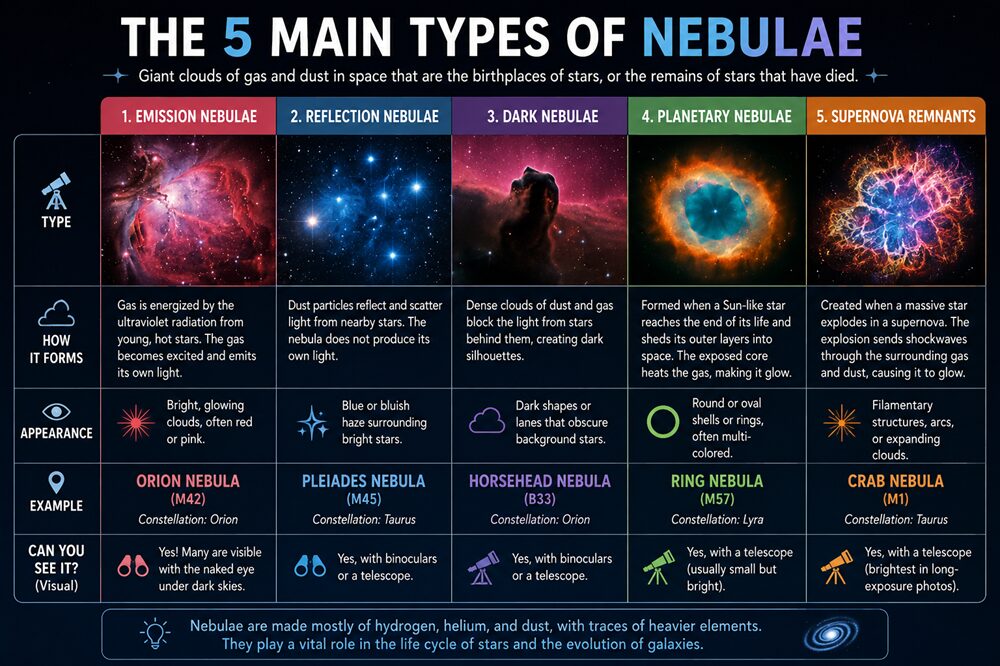
1. Emission Nebulae
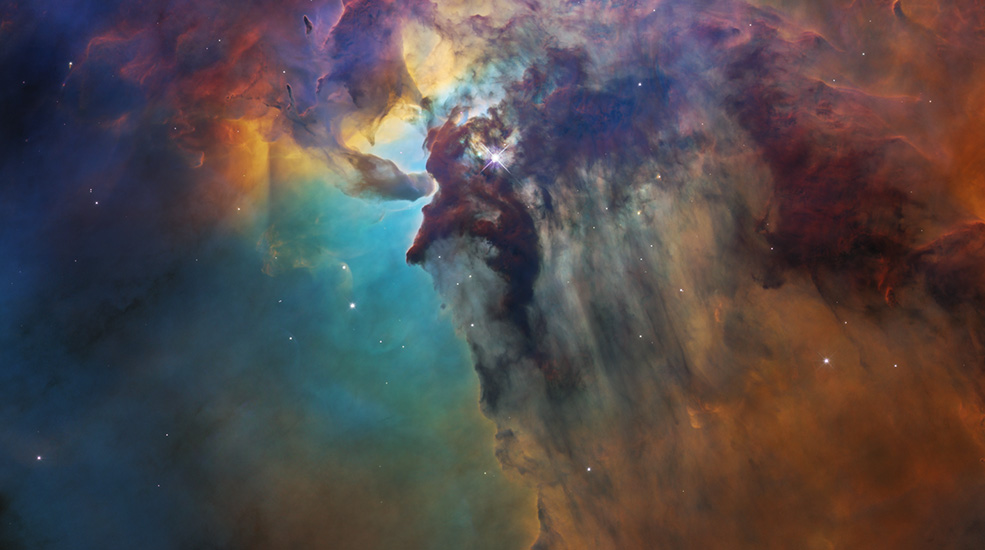
Emission nebulae glow because nearby young stars energise the gas within them.
Ultraviolet radiation from these stars causes hydrogen atoms to emit light, often producing the characteristic pink or red colours seen in astrophotography.
Examples include:
- Orion Nebula
- Lagoon Nebula
- Eagle Nebula
These are among the most active star-forming regions in our galaxy.
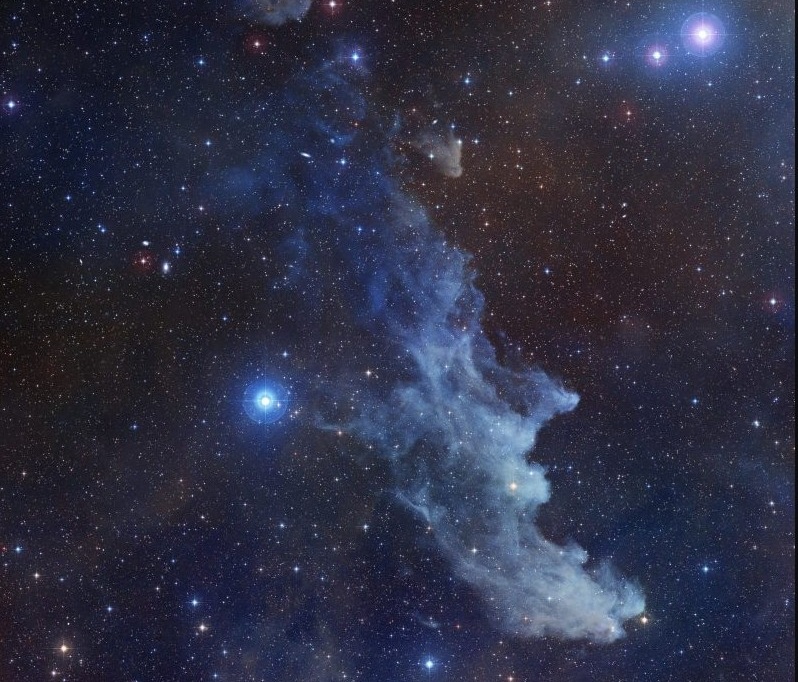
2. Reflection Nebulae
Reflection nebulae do not produce their own light. Instead, they reflect and scatter the light from nearby stars.
They often appear blue because blue light scatters more efficiently than red light.
Examples include:
- The Pleiades Reflection Nebula
- Witch Head Nebula
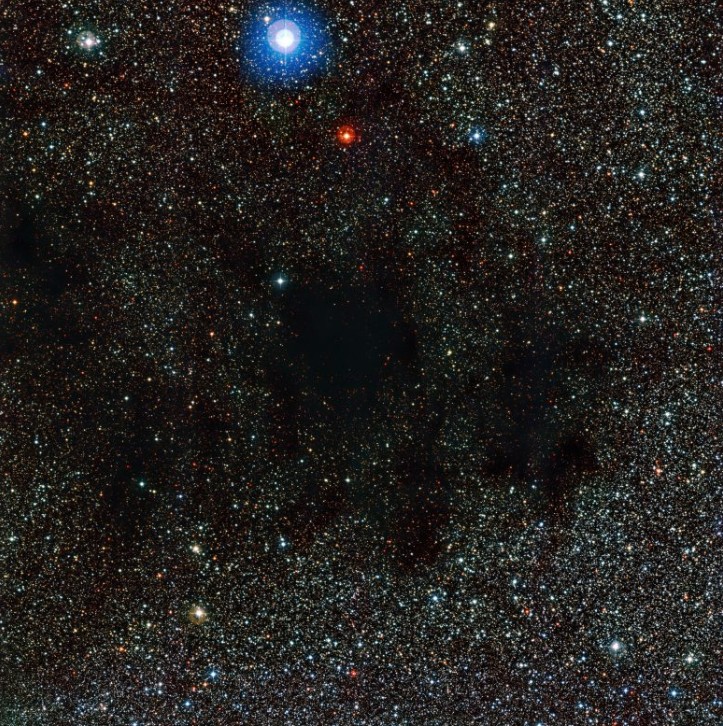
3. Dark Nebulae
Dark nebulae contain dense concentrations of dust that block light from stars behind them. Rather than glowing, they appear as dark silhouettes against brighter backgrounds.
Examples include:
- Horsehead Nebula
- Coalsack Nebula
Dark nebulae often contain the raw materials needed for future star formation.
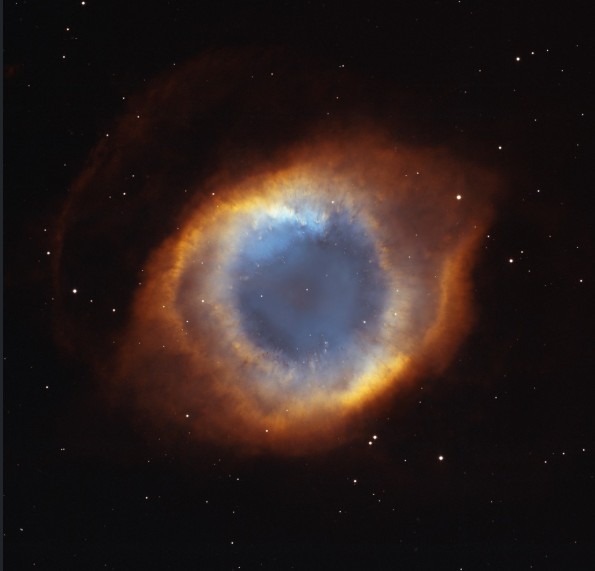
4. Planetary Nebulae
Despite their name, planetary nebulae have nothing to do with planets. Early astronomers thought these objects resembled planets when viewed through small telescopes.
They form when Sun-like stars shed their outer layers during the final stages of stellar evolution.
Examples include:
- Ring Nebula
- Helix Nebula
- Dumbbell Nebula
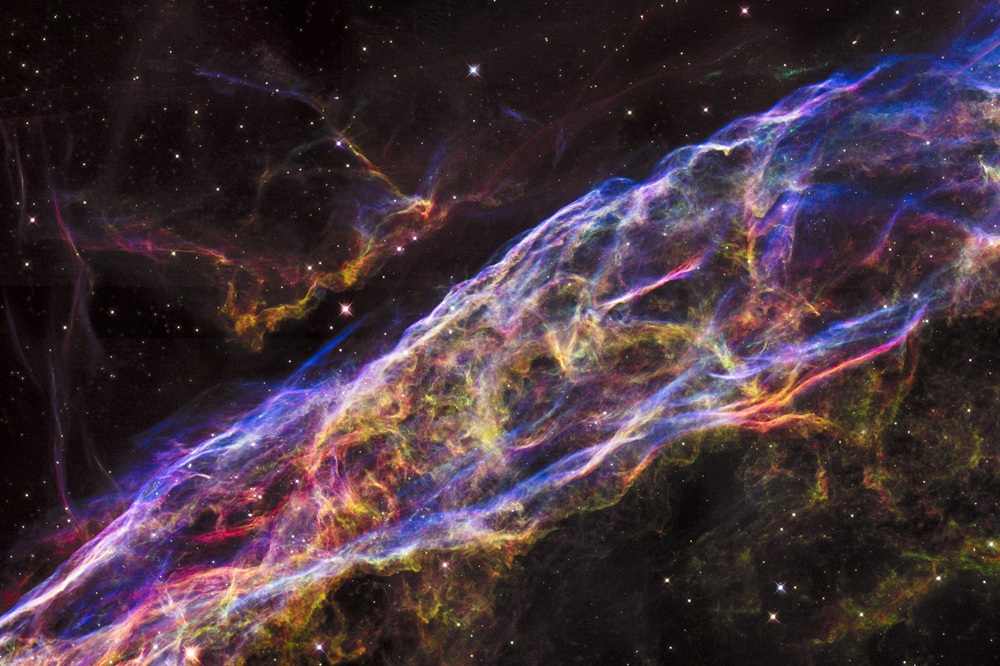
5. Supernova Remnants
Supernova remnants are created when massive stars explode. The expanding debris forms spectacular structures that can remain visible for thousands of years.
Examples include:
- Crab Nebula
- Veil Nebula
These nebulae help distribute heavy elements throughout the galaxy.
What Role Do Nebulae Play in the Life Cycle of Stars?
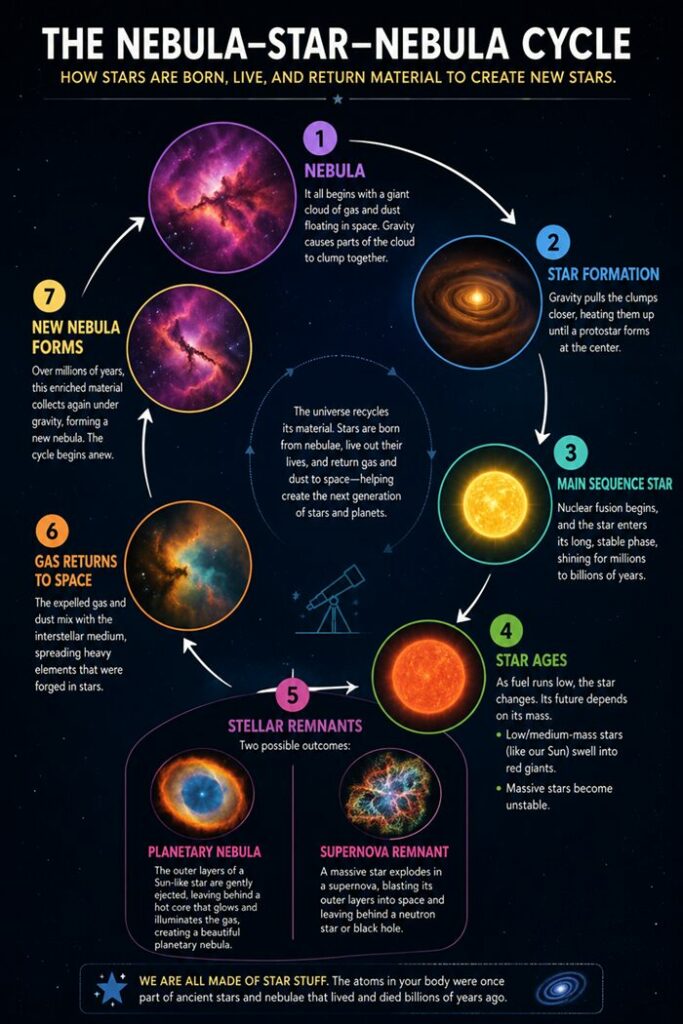
Nebulae are central to stellar evolution.
The process works roughly like this:
- A nebula contains gas and dust.
- Gravity causes material to collapse.
- New stars form.
- Stars spend millions or billions of years generating energy.
- Stars die and return material to space.
- New nebulae form from the recycled matter.
- The cycle begins again.
This continuous recycling process has shaped our galaxy for billions of years.
Every star, including our Sun, was born inside a nebula.
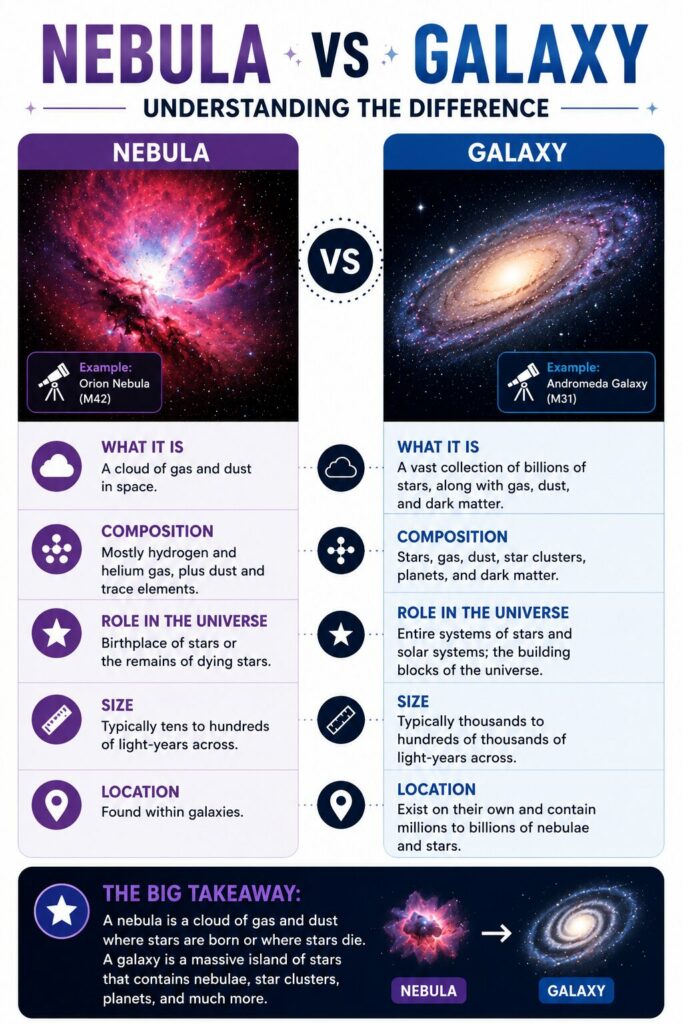
The Difference Between A Nebula And A Galaxy
One of the most common astronomy questions beginners ask is whether a nebula and a galaxy are the same thing.
While both are fascinating objects found in space, they are very different in size, structure, and purpose. The graphic below highlights the main differences.
Famous Nebulae You Should Know
Thousands of nebulae have been discovered throughout the Milky Way, but a handful have become particularly famous among astronomers and stargazers.
These objects are not only scientifically important but also among the most rewarding targets for amateur observers.
Orion Nebula (M42)
Type: Emission Nebula
Constellation: Orion
Distance: Approximately 1,350 light-years
Best Observing Season: Winter
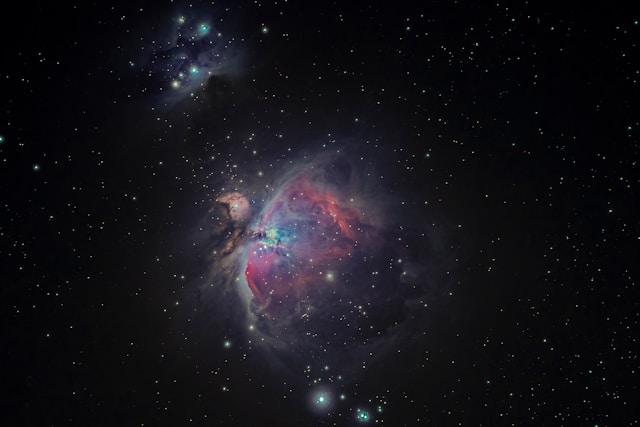
The Orion Nebula is arguably the most famous nebula in the night sky and one of the brightest deep-sky objects visible from Earth.
Located below Orion’s Belt, it can be seen with the naked eye under dark skies and reveals impressive detail through binoculars and telescopes.
The nebula is an active stellar nursery where thousands of young stars are forming.
Why It’s Famous
- Visible to the naked eye
- Easy target for beginners
- Active star-forming region
- Spectacular through telescopes and cameras
Eagle Nebula (M16)
Type: Emission Nebula
Constellation: Serpens
Distance: Approximately 7,000 light-years
Best Observing Season: Summer
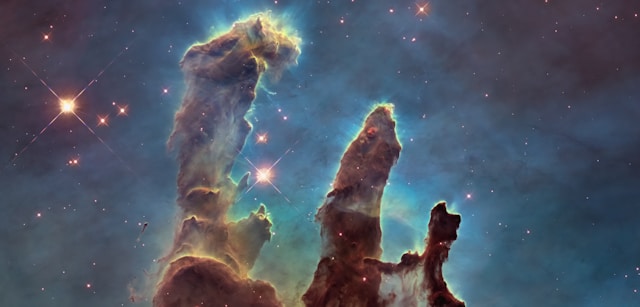
The Eagle Nebula is one of the most celebrated star-forming regions in the Milky Way. It contains a young open star cluster surrounded by glowing clouds of gas and dust, making it both a nebula and a stellar nursery.
The nebula became world-famous in 1995 when the Hubble Space Telescope captured an image of its towering columns of gas and dust known as the Pillars of Creation. These structures are several light-years long and contain dense regions where new stars are forming.
Through amateur telescopes, the Eagle Nebula appears as a faint patch of glowing haze, while larger telescopes and astrophotography reveal increasingly complex detail.
Why It’s Famous
- Home to the iconic Pillars of Creation
- An active stellar nursery where new stars are forming
- One of the most photographed nebulae in the sky
- Demonstrates how stars are born within giant molecular clouds
Horsehead Nebula
Type: Dark Nebula
Constellation: Orion
Distance: Approximately 1,375 light-years
Best Observing Season: Winter
The Horsehead Nebula is one of the most recognisable objects in astronomy.
Its distinctive shape appears as a dark silhouette against a glowing background of hydrogen gas.
Although famous in photographs, it is a challenging visual target requiring dark skies and larger telescopes.

Why It’s Famous
- Iconic horse-head shape
- One of the most photographed nebulae
- Popular astrophotography target
Crab Nebula (M1)
Type: Supernova Remnant
Constellation: Taurus
Distance: Approximately 6,500 light-years
Best Observing Season: Winter
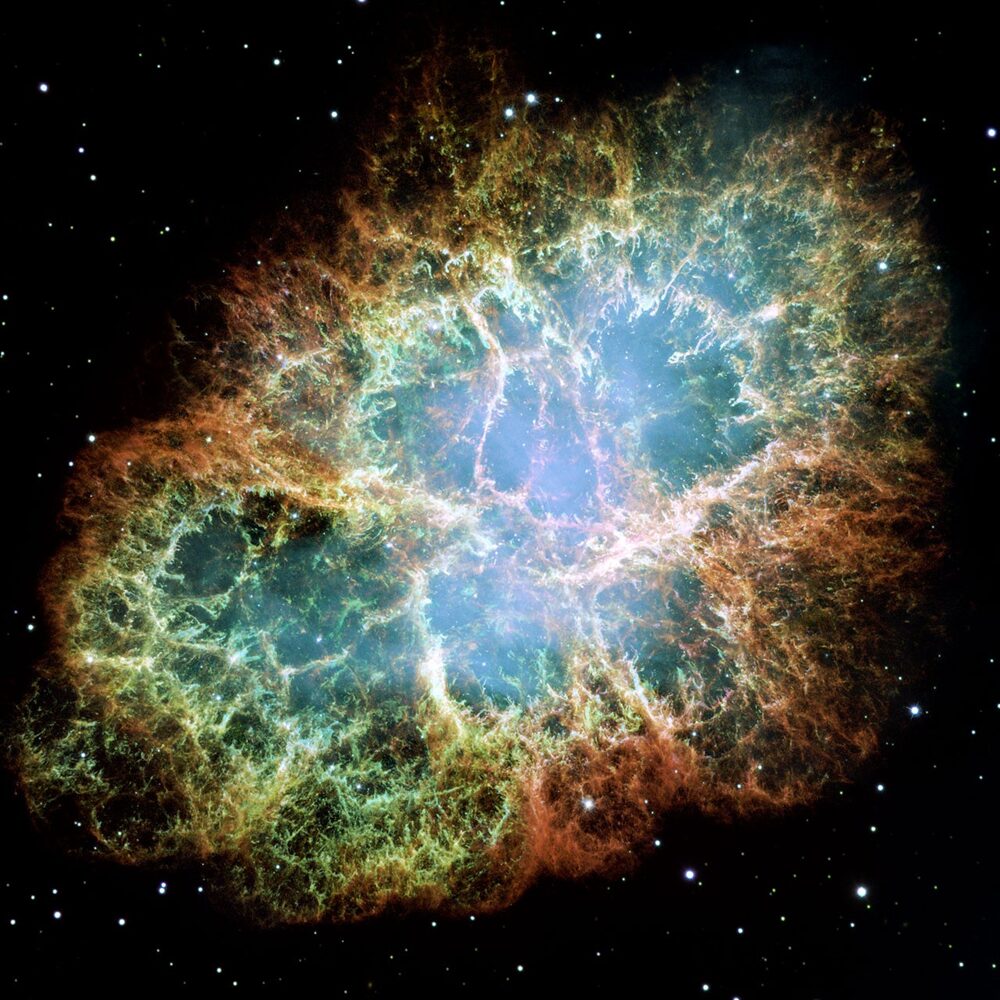
The Crab Nebula is the remnant of a supernova observed by astronomers in the year 1054.
At its centre lies a rapidly spinning neutron star known as a pulsar.
The nebula continues expanding today as the debris from the ancient explosion races outward into space.
Why It’s Famous
Historic supernova remnant
Contains a pulsar
Important object for scientific research
Ring Nebula (M57)
Type: Planetary Nebula
Constellation: Lyra
Distance: Approximately 2,500 light-years
Best Observing Season: Summer
The Ring Nebula represents the future of stars similar to our Sun.
Through a telescope, it appears as a small smoke ring suspended in space.
It offers a fascinating glimpse into the final stages of stellar evolution.

Why It’s Famous
- Easy telescope target
- Classic planetary nebula
- Shows the fate of Sun-like stars
Are Nebulae Visible to the Naked Eye?
A few nebulae can be seen without optical aid under dark skies.
Examples include:
- Orion Nebula
- Lagoon Nebula (very dark locations)
- Eta Carinae Nebula (Southern Hemisphere)
However, most nebulae appear faint and require binoculars or telescopes.
Light pollution can significantly reduce visibility, making dark-sky locations highly desirable.
How to Observe Nebulae
Observing bright nebulae is one of the most rewarding experiences for beginners. If you’re new to the hobby, our guide on how to start stargazing will help you get going.
Start with Binoculars
Large binoculars are excellent for viewing bright nebulae, and the Orion Nebula is particularly impressive through 10×50 binoculars.
Our guide to the best binoculars for astronomy explains which models are ideal for exploring the night sky.
Use a Telescope
A telescope reveals much more structure and detail.
Even a small beginner telescope can show:
- The Orion Nebula
- Ring Nebula
- Lagoon Nebula
- Dumbbell Nebula
Observe from Dark Skies
Dark skies make a huge difference. Many nebulae that are invisible from cities become obvious when viewed from rural locations.
While planning a nebula observing session, it’s worth understanding how moonlight affects sky darkness. Our guide to moon phases explained can help you choose the best nights for observing.
Let Your Eyes Adapt
Allow 20–30 minutes for your eyes to adapt to darkness.
Avoid looking at bright lights or phone screens during observing sessions.
Even beginners can capture bright nebulae using modern technology. Our guide to smartphone astrophotography made easy shows how to take your first images of the night sky.
Why Do Nebulae Look Colourful in Photos?
Many beginners are surprised when they look through a telescope and don’t see the vivid colours shown in astrophotography.
There is a simple reason for this.
Human Vision Has Limits
At low light levels, our eyes rely primarily on rod cells, which are excellent at detecting faint objects but poor at detecting colour.
As a result, most nebulae appear:
- Grey
- White
- Slightly greenish
Cameras Collect More Light
Astrophotography cameras can gather light for minutes or even hours. This allows faint colours to accumulate and become visible in the final image.
The dramatic colours often represent real wavelengths emitted by various elements within the nebula.
Could Our Solar System Have Formed in a Nebula?
The simple answer is yes! Astronomers believe the Solar System formed approximately 4.6 billion years ago within a giant molecular cloud—a type of nebula.
As gravity caused part of the cloud to collapse:
- The Sun formed at the centre.
- A rotating disk developed around it.
- Planets, moons, asteroids, and comets formed from remaining material.
This means Earth itself originated from the gas and dust of an ancient nebula.
Nebulae are just one of many fascinating objects visible after dark. Find out what you can see in the night sky throughout the year in our beginner-friendly guide.
Fun Facts About Nebulae
- Some nebulae span hundreds of light-years.
- Nebulae can contain enough material to create thousands of stars.
- The largest known nebulae are larger than many star clusters.
- The Orion Nebula is one of the closest major stellar nurseries to Earth.
- The Pillars of Creation are several light-years tall.
- Many famous nebula images were captured by the Hubble and James Webb Space Telescopes.
- Our Sun was almost certainly born inside a nebula.
Conclusion
Nebulae are enormous clouds of gas and dust that play a vital role in the universe. They can serve as stellar nurseries where new stars are born, or as the spectacular remains of stars that have reached the end of their lives.
From the glowing Orion Nebula to the haunting silhouette of the Horsehead Nebula, these celestial clouds offer some of the most fascinating and beautiful sights in astronomy.
Understanding nebulae helps us understand the life cycle of stars, the formation of planets, and even the origins of our own Solar System. The next time you see an image of a colourful cosmic cloud, you’ll know you’re looking at one of the universe’s greatest engines of creation and change.
What Is A Nebula? FAQ’s
A nebula is a giant cloud of gas and dust in space. Some nebulae create new stars, while others are formed when stars die.
Nebulae consist mostly of hydrogen and helium gas, along with dust particles and trace amounts of heavier elements.
A few bright nebulae, such as the Orion Nebula, can be seen with the naked eye under dark skies. Most require binoculars or a telescope.
The Orion Nebula is widely considered the most famous nebula because it is bright, easy to locate, and visible with modest equipment.
A nebula is a cloud of gas and dust located within a galaxy. A galaxy is a vast collection of stars, nebulae, star clusters, dark matter, and other objects bound together by gravity.