Understanding what galaxies are is one of the most exciting steps in learning about the universe. For beginners, galaxies can seem mysterious—huge swirling islands of stars far beyond our own night sky.
Take a closer look, and you’ll find galaxies are among the most fascinating and surprisingly easy-to-understand topics in astronomy.
Some galaxies are elegant spirals with sweeping arms full of young stars. Others are giant glowing ovals containing ancient stars. Some look completely chaotic after violent collisions with neighbouring galaxies.
Understanding galaxies is one of the best ways to understand the scale and beauty of the universe itself.
If you’re completely new to the subject, it also helps to first understand what astronomy is and how astronomers study the universe.
In this beginner-friendly guide, you’ll learn:
- What galaxies actually are
- The different types of galaxies
- How galaxies form
- How large galaxies can become
- Where the Milky Way fits into the universe
- Whether you can see galaxies yourself from Earth
By the end, galaxies will feel far less mysterious — and far more fascinating.
TL;DR – Quick Answer
- Galaxies are enormous collections of stars, gas, dust and dark matter held together by gravity.
- The Milky Way is the galaxy that contains our Solar System.
- The main galaxy types are spiral, elliptical and irregular galaxies.
- Galaxies can contain millions, billions or even trillions of stars.
- The universe contains billions of galaxies spread across vast distances.
- Some galaxies can even be seen with the naked eye under dark skies.
What Is a Galaxy?
Galaxies are some of the largest structures in the universe. Some contain just a few million stars, while others contain trillions.
Put simply, a galaxy is a massive collection of gas, dust, and stars—along with their solar systems—all held together by gravity. Our own home, the Milky Way, is one such galaxy, containing around 200 billion stars.
When you look up at the night sky, every star you see with your naked eye belongs to the Milky Way. But beyond it lie hundreds of billions of other galaxies, each containing its own stars, planets, and mysteries.
Comparing galaxies with other cosmic structures.
| Object | What It Is |
|---|---|
| Planet | A world like Earth or Mars |
| Solar System | A star and everything orbiting it |
| Galaxy | A gigantic collection of billions of stars and solar systems |
| Universe | Everything that exists, including all galaxies |
What Is the Milky Way Galaxy?
The Milky Way is the galaxy in which we live.
Every star you can see in the night sky with your eyes belongs to the Milky Way.
Our Sun is just one ordinary star among hundreds of billions inside this giant galaxy.
The Milky Way is classified as a spiral galaxy because it has large curved spiral arms extending outward from its centre.
At the centre of the Milky Way lies a supermassive black hole called Sagittarius A*.
Astronomers estimate the Milky Way is around 100,000 light-years wide and may contain between 100 and 400 billion stars.
If that distance sounds difficult to imagine, this guide explains what a light-year is in simple terms.
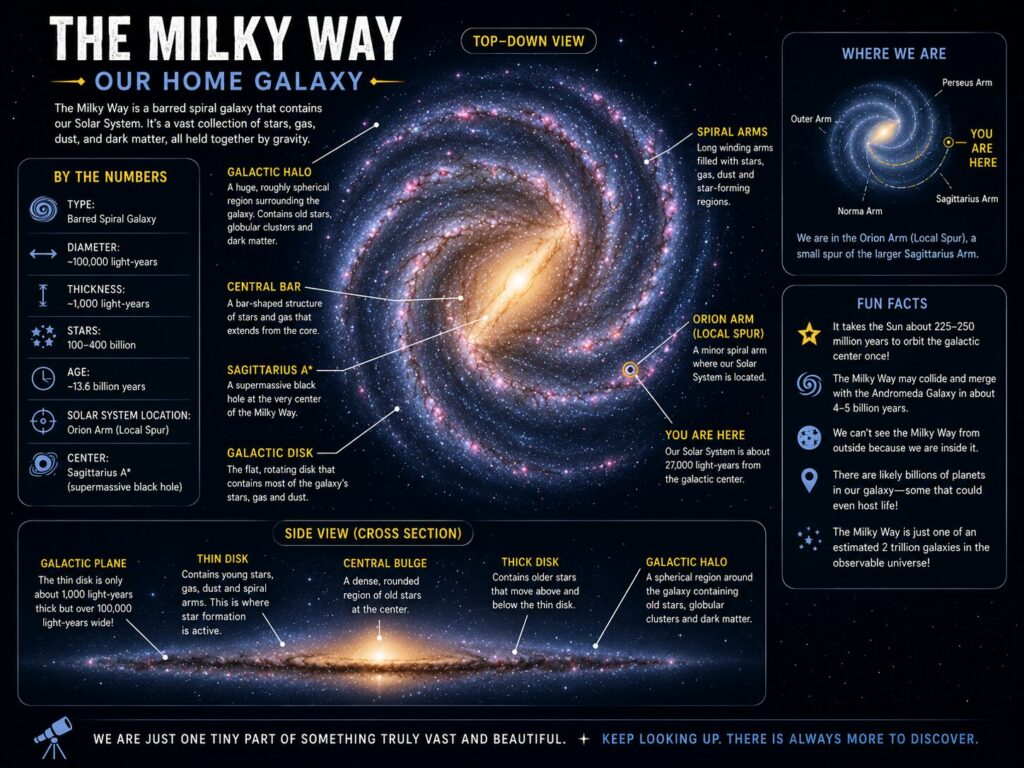
Even though we live inside the Milky Way, we cannot take a photograph of it from the outside because humanity has never travelled beyond our galaxy.
Instead, astronomers study the Milky Way by mapping stars, gas clouds and radio signals from within.
On very dark nights away from light pollution, the Milky Way can appear as a faint glowing band stretching across the sky.
The Main Types of Galaxies
Galaxies come in many different shapes and sizes.
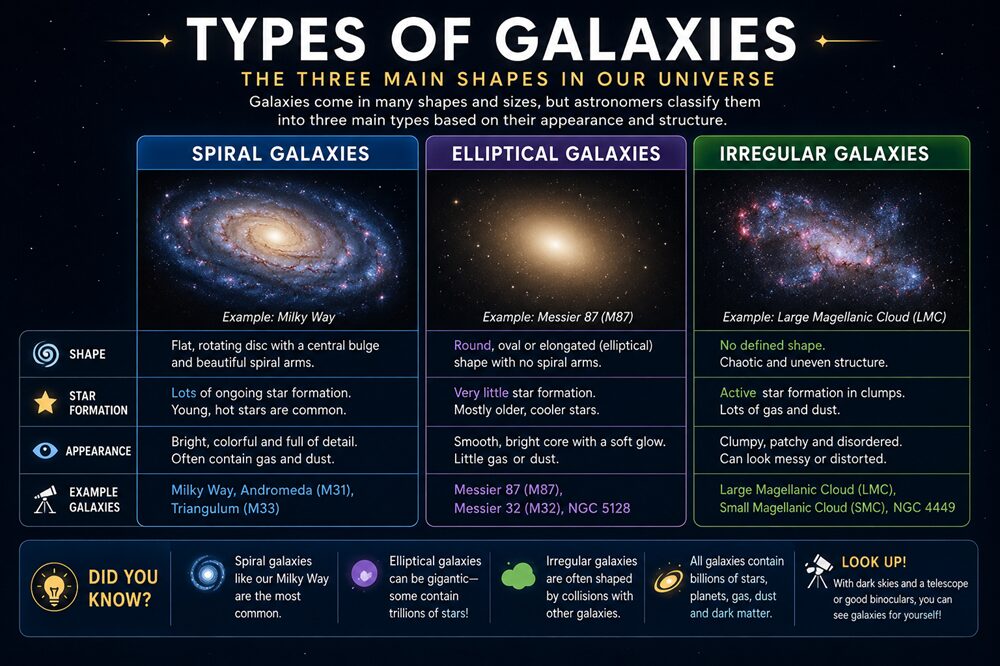
The three main galaxy types are:
- Spiral galaxies
- Elliptical galaxies
- Irregular galaxies
Spiral Galaxies
Spiral galaxies are among the most beautiful objects in astronomy.
They contain:
- A bright central bulge
- Rotating spiral arms
- Large amounts of gas and dust
- Active star formation
Young blue stars are often found inside the spiral arms.
The Milky Way is a spiral galaxy.
Another famous example is the Andromeda Galaxy.
Spiral galaxies often look like giant spinning pinwheels when photographed.
Elliptical Galaxies
Elliptical galaxies are shaped more like glowing spheres or stretched ovals.
Compared to spiral galaxies, they usually contain:
- Older stars
- Less gas and dust
- Less new star formation
Some elliptical galaxies are absolutely enormous and contain trillions of stars.
These galaxies are often found in crowded galaxy clusters where many galactic collisions have already occurred.
Irregular Galaxies
Irregular galaxies do not have a clear shape.
They can appear chaotic, distorted or messy.
Many irregular galaxies were shaped by:
- Collisions with other galaxies
- Powerful gravitational interactions
- Violent star formation
Some irregular galaxies are relatively small dwarf galaxies.
Others are temporary shapes created during galactic mergers.
How Big Are Galaxies?
Galaxies are unimaginably huge. The distances involved are so enormous that astronomers use a measurement called a light-year.
A light-year is the distance light travels in one year. Since light travels incredibly fast, one light-year equals about 9.46 trillion kilometres!
Our Milky Way galaxy is about 100,000 light-years wide.
So, even travelling at the speed of light, crossing the Milky Way galaxy could take around one hundred thousand years!
To put that into perspective: If the Solar System were the size of a small coin, the Milky Way would still be vastly larger than an entire continent
Galaxies also vary enormously in size. Giant galaxies can contain trillions of stars and stretch across hundreds of thousands of light-years.
Dwarf galaxies are smaller galaxies containing relatively few stars. Some contain only a few billion stars.
How Many Galaxies Are in the Universe?
Astronomers estimate that there may be as many as one hundred billion galaxies in the observable universe.
This number comes from deep‑space images taken by telescopes like Hubble and James Webb, which revealed thousands of galaxies in tiny patches of sky no larger than a grain of sand held at arm’s length.
These galaxies come in all shapes, sizes, and ages—from young, star‑forming galaxies to ancient, faint ones that formed shortly after the Big Bang.
What Are Galaxies Made Of?
Galaxies are made from several major components.
Stars
Stars are the most visible parts of galaxies.
Galaxies can contain stars of many different ages, colours and sizes.
Planets
Planets orbit stars throughout galaxies.
Astronomers now believe there may be more planets than stars in the universe.
Gas and Dust
Huge clouds of gas and dust drift through galaxies.
These regions are often called nebulae.
New stars form inside these giant clouds.
Black Holes
Most large galaxies contain a supermassive black hole at their centre.
These black holes can be millions or even billions of times the mass of the Sun.
Dark Matter
Dark matter is one of the greatest mysteries in astronomy.
Astronomers cannot see it directly, but they know it exists because its gravity affects how galaxies move.
In fact, dark matter may make up most of a galaxy’s total mass.
Mostly Empty Space
One surprising fact is that galaxies are mostly empty space.
Even though galaxies contain huge numbers of stars, the distances between those stars are enormous.
If two galaxies collide, individual stars usually pass by each other safely without crashing.
How Do Galaxies Form?
Galaxies began forming not long after the Big Bang.
In the early universe, matter was spread unevenly across space.
Over time, gravity pulled gas and matter together into larger and larger clumps.
Eventually, these clumps formed the first galaxies.
Smaller galaxies often merged together to create larger galaxies.
Even today, galaxies continue evolving.
Are Galaxies Moving?
Yes — galaxies are constantly moving.
Galaxies Rotate
Stars orbit around the centres of galaxies.
Our own Solar System travels around the centre of the Milky Way.
One full orbit takes around 230 million years.
Galaxies Move Through Space
Galaxies also move relative to one another.
Many galaxies belong to larger groups called galaxy clusters.
Gravity pulls these giant structures together.
Galaxy Collisions
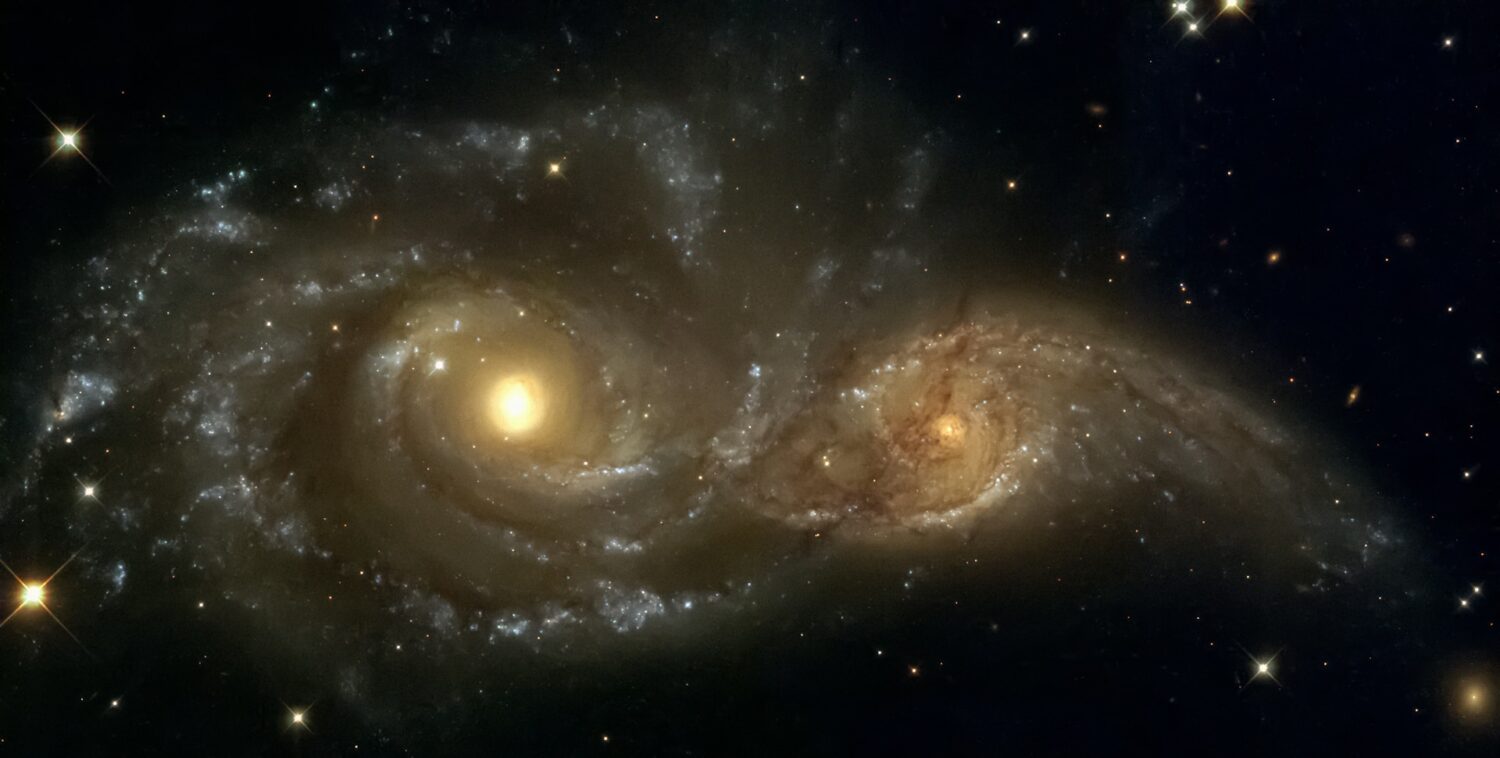
Galaxies can collide and merge over millions or billions of years.
These events dramatically reshape galaxies.
Astronomers believe the Milky Way has already absorbed smaller galaxies in the past.
The Future Milky Way-Andromeda Collision
The Milky Way and the Andromeda Galaxy are slowly moving toward each other.
In several billion years, the two galaxies may merge into one giant galaxy.
Even though this sounds violent, individual stars are so widely separated that direct star collisions would still be extremely rare.
The Universe Is Expanding
One of the greatest discoveries in astronomy came from astronomer Edwin Hubble.
He discovered that distant galaxies are moving away from us.
This revealed that the universe itself is expanding.
Astronomers detect this movement using something called redshift.
As galaxies move away, their light becomes stretched toward the red part of the spectrum.
This discovery completely changed our understanding of the cosmos.
Can You See Galaxies From Earth?
Yes — some galaxies can actually be seen from Earth. However, most appear extremely faint because they are so far away.
If you’re new to observing the night sky, this beginner guide explains how to start stargazing step-by-step.
The Andromeda Galaxy
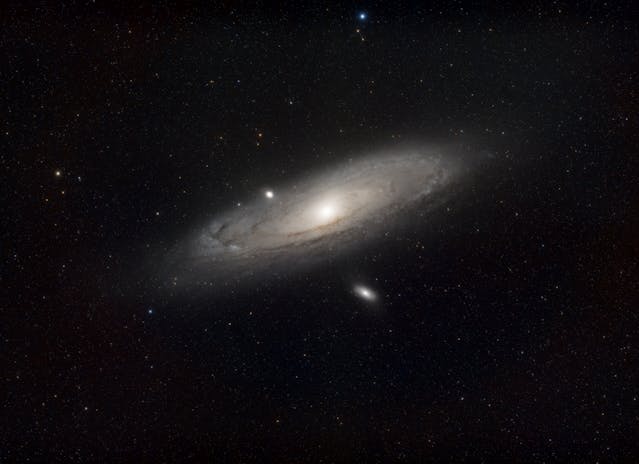
The Andromeda Galaxy is the most famous galaxy visible to the naked eye.
Under dark skies far from light pollution, it appears as a faint fuzzy patch.
What makes this incredible is that the light entering your eyes left Andromeda over two million years ago.
Using Binoculars and Telescopes
Binoculars are often an excellent way for beginners to start observing galaxies.
A small telescope can reveal:
- Brighter galactic cores
- Faint galaxy shapes
- Additional distant galaxies
Beginner Tips for Observing Galaxies
- Observe from dark skies away from city lights
- Allow your eyes 20–30 minutes to adapt to darkness
- Use binoculars first before upgrading equipment
- Avoid viewing during a bright full Moon
Best Beginner Galaxy Targets
- Andromeda Galaxy (M31)
- Whirlpool Galaxy (M51)
- Bode’s Galaxy (M81)
- Cigar Galaxy (M82)
NASA has captured some of the most detailed galaxy images ever taken, helping astronomers study how galaxies form and evolve. Discover NASA’s guide to galaxies.
Galaxy vs Solar System – What’s the Difference?
Many beginners confuse galaxies with Solar Systems.
The difference is mainly scale.
A Solar System contains:
- One star
- Planets orbiting that star
- Moons, asteroids and comets
A galaxy contains billions of Solar Systems.
Our Solar System is only a tiny part of the Milky Way galaxy.
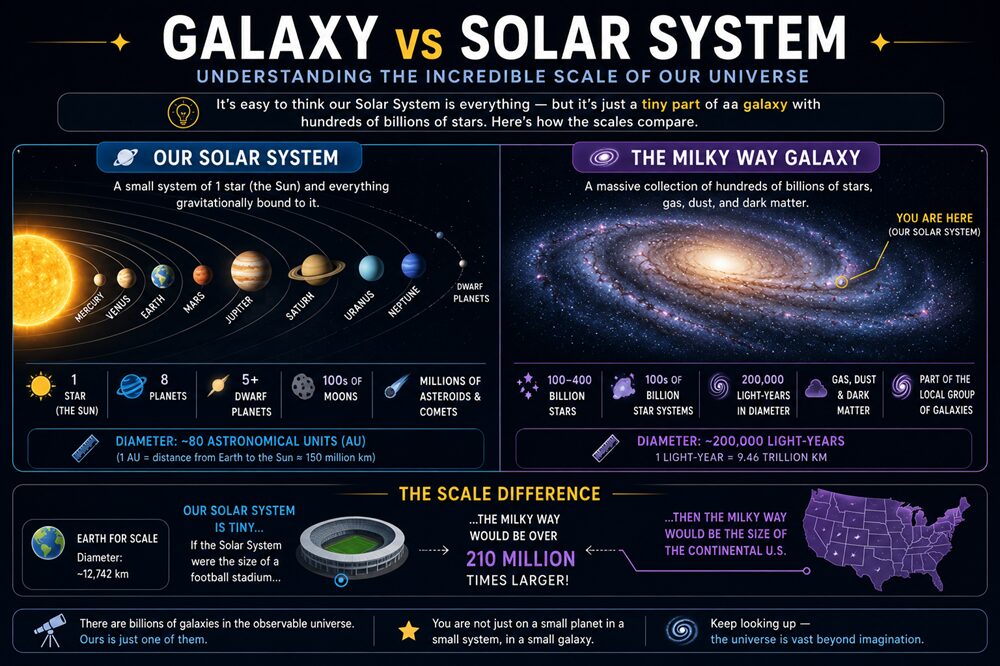
- Solar System = one house
- Galaxy = an enormous city filled with houses
Fun Facts About Galaxies
- Some galaxies contain trillions of stars.
- Most large galaxies contain supermassive black holes.
- Galaxies can collide and merge.
- The Milky Way is constantly moving through space.
- Some galaxies “steal” stars from smaller neighbouring galaxies.
- The light from distant galaxies can take millions or billions of years to reach Earth.
- Astronomers use giant telescopes to study galaxies formed shortly after the Big Bang.
- There may be more galaxies in the universe than scientists once believed.
Final Thoughts
Galaxies are some of the most astonishing structures in the universe.
They contain unimaginable numbers of stars, planets and cosmic wonders spread across vast distances.
Our own Milky Way is just one galaxy among billions, yet it already contains more stars than we can truly comprehend.
By learning about galaxies, we begin to understand the incredible scale of the cosmos and our tiny place within it.
The next time you look up at the night sky, remember that many of those faint points of light belong to a gigantic galactic system stretching across space.
And in truly dark skies, you may even be able to see another galaxy with your own eyes.
Astronomy becomes even more exciting once you realise just how enormous the universe really is.
What Are Galaxies? – FAQ
A galaxy is a huge collection of stars, planets, gas, dust and dark matter held together by gravity.
Astronomers believe the observable universe contains billions or possibly trillions of galaxies.
The Milky Way is a spiral galaxy.
The closest major galaxy to the Milky Way is the Andromeda Galaxy.
Yes. Under dark skies, the Andromeda Galaxy can sometimes be seen with the naked eye.