Whether you’re a new observer or a seasoned backyard astronomer, the right eyepiece can dramatically transform your view of the night sky.
Eyepieces determine how much you’ll see, how wide your field of view will be, and how comfortable your observing sessions feel — yet choosing them can be confusing.
In this guide, you’ll learn:
- How to choose the best eyepieces for different goals (planets, deep-sky, wide views)
- Our top recommendations for every budget and experience level
- Quick tips on focal length, eye relief, and field of view
Let’s dive in!
Note: This post contains affiliate links. If you buy through these links, I may earn a small commission at no extra cost to you. As an Amazon Associate, I earn from qualifying purchases.
In a hurry? Here are our top telescope eyepiece picks for beginners and experienced stargazers alike:
TL:DR – Best Telescope Eyepieces for Stargazing (Quick Look)
- Best Beginner Zoom: SV135 Zoom Eyepiece – versatile focal range in one eyepiece
- Best Budget Fixed Lens: Sky-Watcher SP Series 17mm Super Plossl Eyepiece – sharp and affordable
- Best for Wide Views: Celestron Omni 32mm Eyepiece – ideal for deep-sky objects
- Best for Planetary Detail: Celestron X-Cel LX Eyepiece – crisp high-magnification views
- Best Premium Wide-Field: Explore Scientific 82° Argon Eyepiece 4.7mm – immersive viewing
- Best Premium All-Rounder: Celestron Luminos Eyepiece – wide AFOV and premium optics
Tip: A 32 mm for wide views + 5–10 mm for planets makes a great starter eyepiece kit.
Eyepiece Comparison: At a Glance
| Eyepiece | Focal Length | AFOV | Eye Relief | Best For | Skill Level |
|---|---|---|---|---|---|
| SVBONY SV135 Zoom Eyepiece | 7–21 mm (Zoom) | 40°–57° | Good | Flexible magnification | Beginner |
| SkyWatcher 17mm SP Series Super Plössl | 17 mm | ~52° | Moderate | General observing | Beginner |
| Celestron Omni 32mm Eyepiece | 32 mm | 44° | 22 mm | Wide deep-sky views | Intermediate |
| Celestron X-Cel LX 5mm Eyepiece | 5 mm | 60° | 16 mm | Planetary detail | Intermediate |
| Explore Scientific 82° Argon 4.7mm | 4.7 mm | 82° | Excellent | High-power immersive viewing | Premium |
| Celestron Luminos 10mm Eyepiece | 10 mm | 82° | Good | All-round premium viewing | Premium |
Tip: A 32 mm eyepiece is ideal for locating deep-sky objects, while 5–10 mm eyepieces are better suited for planetary and lunar detail.
Eyepiece Basics
If you’re still choosing your first telescope, our post How To Buy A Telescope – A Beginner’s Guide explains the key features to look for before investing in eyepieces.
If you already have your scope and you’re looking to upgrade your eyepiece set-up, before we pick favourites, let’s cover a few essentials:
🔎 What Does an Eyepiece Do?
Your telescope gathers light; the eyepiece shapes that light into the view you see. Eyepiece specs affect:
- Magnification: Telescope focal length ÷ eyepiece focal length
- Field of view (FOV): How much sky you see
- Eye relief: Comfort for your eye, especially with glasses
- Contrast & clarity: Optical quality and coatings matter
Different types of telescopes can benefit from different eyepiece focal lengths, so it’s worth understanding how your telescope design affects magnification.
Key Specs Explained
Focal Length
Lower mm = higher magnification. Too much magnification can mean dimmer images and more blur from atmosphere shake.
Good rule of thumb:
- Planetary & lunar details: 5–10 mm range
- General observing / deep-sky: 10–25 mm range
Many astronomers enjoy capturing quick lunar photos through their eyepiece, and a smartphone adapter can make this surprisingly easy.
Field of View (AFOV)
Wider AFOV feels more immersive and shows larger objects like nebulae.
- 44–52°: Standard (Plössl)
- >70°: Wide-eyepiece (immersive)
If you also enjoy wide-field observing, you may find our Complete Guide to Binocular Accessories for Stargazing helpful for improving your binocular setup.
Eye Relief
If you wear glasses, aim for 15 mm eye relief or above, so you can see the full field.
Best Budget Telescope Eyepieces
SVBONY SV135 Zoom Eyepiece
Best For: Beginners who want flexibility
Focal Range: 7–21mm (Zoom)
Barrel Size: 1.25″

Why It’s Great
The SV135 Zoom is perfect for beginners because it lets you change magnification without swapping eyepieces. That makes it ideal for learning what focal lengths you enjoy most while observing the Moon, planets, and bright deep-sky objects.
Pros
- Multiple magnifications in one eyepiece
- Easy to use
- Great value for money
Cons
- Narrower field of view at lower magnifications
- Not as sharp as premium fixed lenses
Who Should Buy This?
New telescope owners who want a simple, affordable way to explore different magnifications before investing in a full eyepiece set.
SkyWatcher 17mm SP Series Super Plössl
Best For: General-purpose observing
Focal Length: 17mm
Barrel Size: 1.25″

Why It’s Great
This 17mm Plössl offers sharp, bright views at a very affordable price. It’s a reliable everyday eyepiece that works well for lunar detail and many deep-sky objects.
Pros
- Sharp central image
- Lightweight and affordable
- Excellent mid-range magnification
Cons
- Narrower apparent field of view
- Moderate eye relief
🔎 Who Should Buy This?
Beginners who want a dependable fixed focal length eyepiece to complement a low-power 32mm lens.
Best Intermediate Eyepieces
Celestron Omni 32mm (1.25″)
Best For: Wide-field deep-sky observing
Focal Length: 32mm
Apparent Field of View: 44°
Barrel Size: 1.25″

Why It’s Great
The Celestron Omni 32mm is a classic low-power eyepiece that excels at bright, wide views of the night sky. It’s ideal for scanning star fields, locating faint objects, and observing large deep-sky targets like the Orion Nebula or Andromeda Galaxy.
If you want an eyepiece that makes finding objects easier while delivering pleasing, bright views, this is a reliable step up from basic kit lenses.
Pros
- Bright, low-power wide views
- Excellent for locating deep-sky objects
- Comfortable eye relief
- Reliable optical performance
Cons
- Narrower apparent field compared to wide-angle designs
- Not suitable for high-magnification planetary detail
🔎 Who Should Buy This?
Observers who already own a mid-power eyepiece and want to add a dedicated wide-field option for deep-sky viewing.
Celestron X-Cel LX 5mm (1.25″)
Best For: Planetary and lunar detail
Focal Length: 5mm
Apparent Field of View: 60°
Barrel Size: 1.25″

- X-CEL LX EYEPIECES: Optimized for planetary viewing, offer a 60° field of view through a six-element fully multi-coated lens system
- POP-UP RUBBER EYEGUARDS: Provides comfort and increase contrast; Raise and lower with a simple twist
- TREADED RUBBER GRIP: Gives a no-slip grip, even with gloves on
- 1.25” BARRELS: Barrels are threaded to accept filters
- FULLY MULTI-COATED OPTICS: Enjoy crisp, sharp views
⭐ Why It’s Great
The Celestron X-Cel LX 5mm is designed for crisp, high-magnification performance. It delivers strong contrast and sharp detail, making it ideal for observing planetary features such as Jupiter’s cloud bands or Saturn’s rings.
With more comfortable eye relief than entry-level Plössls and a wider 60° apparent field, it feels noticeably more refined during extended observing sessions.
Pros
- Sharp, high-contrast planetary views
- Comfortable 16mm eye relief
- Wider 60° field than basic designs
- Solid, well-built housing
Cons
- High magnification requires steady seeing conditions
- Limited use for large deep-sky objects
🔎 Who Should Buy This?
Intermediate astronomers looking to add serious planetary capability to their eyepiece collection without moving into premium pricing territory.
Premium Telescope Eyepieces
Explore Scientific 82° Argon 4.7mm (1.25″)
Best For: Immersive high-power planetary observing
Focal Length: 4.7mm
Apparent Field of View: 82°
Barrel Size: 1.25″

Why It’s Exceptional
The Explore Scientific 82° 4.7mm delivers an expansive, immersive field that transforms high-magnification viewing. Instead of the narrow “looking down a tube” sensation common with basic eyepieces, this design opens the sky up dramatically — even at high power.
Fine planetary detail appears crisp and well-defined, while the generous 82° apparent field keeps objects in view longer, particularly helpful when using non-tracking mounts.
This is a serious optical upgrade for observers who want both performance and immersion.
Pros
- Expansive 82° immersive field of view
- Excellent contrast and edge sharpness
- Waterproof and argon-purged construction
- Keeps objects in view longer on manual mounts
Cons
- Premium price point
- High magnification demands steady seeing conditions
🔎 Who Should Buy This?
Experienced observers who want to elevate their planetary viewing experience and appreciate wide-field immersion at high magnifications.
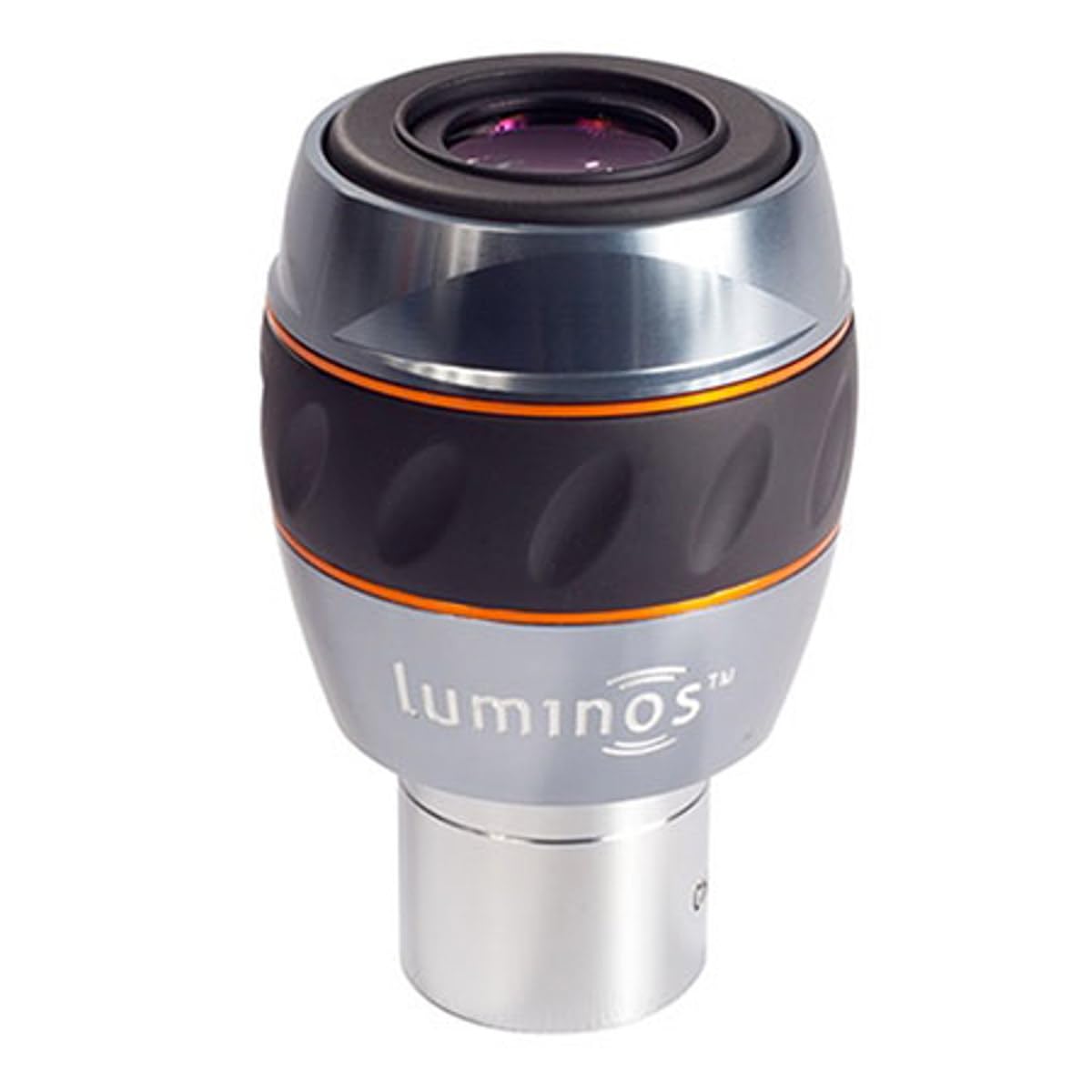
Celestron Luminos 10mm Eyepiece (1.25″)
Best For: Premium all-round performance
Focal Length: 10mm
Apparent Field of View: 82°
Barrel Size: 1.25″
Why It Stands Out
The Celestron Luminos 10mm strikes an impressive balance between wide-field immersion and crisp optical performance. With its 82° apparent field of view, objects feel expansive and engaging, making both planetary and deep-sky observing more dynamic.
It delivers strong contrast and satisfying sharpness across much of the field, making it an excellent “centre-piece” eyepiece in a serious amateur’s kit.
Pros
- Wide 82° immersive field
- Strong contrast and clarity
- Excellent mid-high power focal length
- Robust, premium build quality
Cons
- Heavier than basic Plössl eyepieces
- May be overkill for very small beginner scopes
🔎 Who Should Buy This?
Astronomers ready to move beyond entry-level optics and build a refined eyepiece kit with immersive wide-angle capability.
Pro Tips for Choosing Eyepieces
Consider Your Telescope’s f-Ratio
- Fast scopes (f/4–f/5): Wide AFOV eyepieces are best
- Slower scopes (f/8+): Plössls and mid-range designs work well
Match Magnification to Seeing
High magnification is only useful if the atmospheric “seeing” is steady.
Comfort Matters
Longer eye relief = more comfortable viewing, especially at star parties.
Suggested Eyepiece Kit Setup
Here’s a quick guide to a versatile set:
- 32 mm: Low power, wide sky scanning
- 20 mm: General observing
- 10–12 mm: Planets & lunar detail
- 6–8 mm: High power for small planetary features
This gives a broad set of magnifications while avoiding too much overlap.
Final Thoughts
Eyepieces are the heart of your telescopic experience. Rather than buying one and stopping there, building a small, well-rounded kit will let you explore everything from the Moon’s craters to distant galaxies.
Whether you’re new to stargazing or fine-tuning your gear, the perfect eyepiece can rekindle your love for the night sky.
Best Telescope Eyepieces – FAQ’s
A mid-range eyepiece between 15mm and 25mm is ideal for beginners. These provide a good balance between magnification and image brightness, making it easier to observe the Moon, planets, and deep-sky objects without overly dim or shaky views.
Yes — a zoom eyepiece is a great choice for beginners because it allows you to change magnification without swapping lenses. This makes it easier to experiment with different viewing powers when observing the Moon, planets, or star clusters.
High-power eyepieces in the 5mm to 10mm range are best for viewing planetary detail. These allow you to see features such as Saturn’s rings, Jupiter’s cloud bands, and lunar craters more clearly when atmospheric conditions are stable.
A low-power eyepiece such as a 32mm is ideal for deep-sky observing. These eyepieces provide wider fields of view, allowing you to see larger objects like the Orion Nebula, Andromeda Galaxy, and open star clusters more easily.
Yes — most astronomers use a small selection of eyepieces for different types of observing. A simple starter set might include a 32mm for wide views, a 17mm for general observing, and a 5–10mm for planetary detail.