Buying an astronomy gift can be surprisingly tricky. There are so many possibilities, from books and star charts to binoculars, telescope accessories and beautiful space-themed gifts for the home.
The good news is that you don’t need to know a great deal about astronomy to choose something they’ll love.
The trick is to start with the person, not the product. Think about what aspect of astronomy they enjoy, how experienced they are, what equipment they already have and, of course, how much you’d like to spend.
In this guide, we’ll walk you through the key things to consider so you can choose an astronomy gift that’s thoughtful, useful and, most importantly, something they’ll actually enjoy.
TL;DR: How to Choose The Perfect Astronomy Gift
Not sure what kind of astronomy gift to buy? Start with the person rather than the product.
- What do they enjoy most? This helps you decide whether to focus on stargazing, astrophotography, books, space or something decorative.
- How experienced are they? A beginner may appreciate something simple and easy to use, while an experienced astronomer may have more specific preferences.
- What equipment do they already own? Knowing what they already have can help you avoid buying an accessory that isn’t compatible with their equipment.
- What’s your budget? Set a comfortable budget first, then look for the type of gift that offers the most value within it..
- Where do they enjoy astronomy? Think about whether they observe from home, travel to darker skies or simply enjoy astronomy indoors. Portability, size and practicality may all matter.
- Are you unsure what they need? If you’re not confident about their equipment or preferences, a book, general-purpose gift or gift voucher can be a safer choice.
Once you know what kind of gift is likely to suit them, you can explore our Gifts & Books guides for specific ideas and recommendations.
1. Start With the Person, Not the Product
Before you start looking for an astronomy gift, think about the person you are buying for.
The best gift is not necessarily the most expensive, impressive or technically advanced option. It is the one that suits their interests, experience and circumstances — and that they will actually enjoy using.
A few simple questions can help you narrow down the possibilities:
- What part of astronomy do they enjoy most?
They may love observing the night sky, learning about space, taking photographs, reading astronomy books or simply enjoying space-themed items around the home. - Are they a complete beginner or an experienced astronomer?
Someone just discovering astronomy may appreciate a simple, easy-to-use gift, while an experienced observer may already have very specific preferences. - What equipment do they already own?
They may have a telescope, binoculars, a camera or a collection of accessories. Knowing what they already use can help you avoid buying something unsuitable or incompatible. - Do they enjoy astronomy indoors or outdoors?
Some people spend evenings observing from the garden or travelling to darker skies. Others prefer books, models, artwork or other astronomy-related gifts for the home. - Would they prefer something practical or something purely enjoyable?
A useful accessory may be ideal for an active stargazer, while a Moon lamp, astronomy book or space-themed gift may be more suitable for someone who simply loves the subject.
You do not need to know the answers to every question before choosing a gift. Even a little information about the person can help you make a more thoughtful choice.
The aim is to choose a gift that fits the person — rather than buying an astronomy product simply because it looks impressive.
2. Choose a Gift Based on Their Astronomy Interests
Once you have thought about the person, consider which part of astronomy they enjoy most.
Astronomy is a broad subject. Someone who regularly observes the night sky may appreciate something very different from a person who enjoys reading about the universe or decorating their home with space-themed items.
For Someone Who Enjoys Stargazing
If they enjoy spending time outside looking at the Moon, stars and planets, a gift that supports their observing may be a good choice.
The right option will depend on their experience and the equipment they already own. They may appreciate something that helps them find objects in the sky, makes observing more comfortable or adds to their enjoyment of an evening outdoors.
However, be cautious about buying specialist accessories unless you know what equipment they use. Not every accessory fits every telescope or binocular.
For Someone Interested in Astrophotography
Astrophotographers can be particularly difficult to buy for because their equipment often depends on the camera, lens, telescope, mount and accessories they already own.
Unless you know exactly what they need, it may be safer to choose something that does not depend on a particular setup. A photography or astronomy book, a practical observing item or a carefully chosen general-purpose gift may be more suitable than guessing at a specialist accessory.
If you do want to buy equipment, check compatibility first.
Our astrophotography guides can also help if you’re trying to understand the equipment involved.
For Someone Who Loves Astronomy Books
Books can make excellent astronomy gifts because they do not usually depend on existing equipment.
The best choice will depend on what they enjoy reading about. They may prefer beginner-friendly guides, books about the planets and Moon, deep-space subjects, astronomy photography, the history of space exploration or beautifully illustrated books.
Think about whether they want to learn practical observing skills or simply enjoy exploring the subject from home.
Take a look at our astronomy book guide for more ideas.
For Someone Who Loves Space but Does Not Regularly Observe
Not everyone who loves astronomy wants to spend evenings outside with a telescope.
Some people are more interested in the wonder of space, planets, astronauts and the universe itself. For them, a decorative or educational gift may be more appropriate than observing equipment.
Books, Moon-themed gifts, artwork, models and other space-related items can all be good choices, especially if you know their personal taste.
For Children

When buying an astronomy gift for a child, age and suitability matter more than technical specifications.
A good gift should be engaging, easy to understand and appropriate for the child’s interests and abilities. Books, creative activities, models and simple ways to explore the night sky may all be worthwhile options.
It is also worth considering whether the child can enjoy the gift independently or whether an adult will need to help them use it.
The Main Thing to Remember
Try to match the gift to the way the person enjoys astronomy.
Someone who loves observing may value a practical aid, while someone who enjoys learning may prefer a book. A space enthusiast who rarely goes outdoors may get more pleasure from a decorative or educational gift.
The more closely the gift matches their interests, the more likely they are to use and appreciate it.
3. Choose the Right Gift for Their Experience Level
The right astronomy gift for a beginner may not be the right choice for someone who has been observing the night sky for years.
Thinking about their experience can help you choose something that feels useful and enjoyable, rather than something that is too complicated, too basic or unlikely to be used.
For a Complete Beginner
Someone who is just starting to explore astronomy will often benefit from a gift that is simple, approachable and easy to use.
They may still be discovering what interests them, so it is usually better to avoid highly specialised equipment unless they have specifically asked for it.
A gift that helps them learn the night sky, understand the basics or enjoy their first observing sessions may be a more suitable starting point.
The main aim is to encourage their interest without making astronomy feel complicated.
For an Enthusiastic Beginner
An enthusiastic beginner may already have spent time looking at the Moon, learning constellations or using a basic telescope or pair of binoculars.
They may now be ready to explore the subject in more detail. At this stage, a gift that supports their developing interests could be more appropriate than a very basic introduction.
However, it is still worth checking what they already own and what they are hoping to do next. Their interests may be changing as they gain experience.
For an Experienced Amateur Astronomer
Experienced astronomers can be the most difficult people to buy for.
They may already own the equipment they need, know exactly which brands they prefer and have strong opinions about accessories, eyepieces, cameras or mounts.
For this reason, avoid assuming that a more expensive or technically advanced product will automatically make a good gift.
If you are considering specialist equipment, ask discreet questions about what they use or what they might need. Otherwise, a book, practical observing gift or gift voucher may be a safer choice.
What If You Don’t Know Their Experience Level?
If you are unsure how experienced the person is, choose something that does not require a particular level of knowledge or equipment.
A broadly useful astronomy book, an attractive space-related gift or another general-purpose option may be less risky than specialist equipment.
You can also ask someone who knows them well. A little information beforehand may help you choose a much more suitable gift.
The best astronomy gift should feel appropriate for the person’s current interests and experience — not like a test they have to pass.
4. Think About Your Budget
You do not need to spend a large amount of money to choose a thoughtful astronomy gift.
The best choice depends on the person and what they enjoy, rather than simply how much the gift costs. A useful, well-chosen book or practical accessory may be more appreciated than an expensive product that does not suit their interests.
Gifts for Smaller Budgets
If you are working with a modest budget, focus on gifts that are enjoyable, useful or help the person explore astronomy in a simple way.
You do not have to buy specialist equipment. A suitable book, observing aid, creative activity or space-related gift may offer plenty of enjoyment without costing a great deal.
Gifts for Larger Budgets
A larger budget gives you more possibilities, but it does not automatically make the buying decision easier.
Telescopes, cameras, mounts and other specialist equipment can be expensive, and choosing the wrong item may leave the recipient with something they cannot use properly.
Before spending a significant amount, make sure you understand what the person wants and whether the equipment will suit what they already own.
Don’t Feel You Have to Spend the Full Amount
It can be tempting to use the entire budget simply because it is available. However, a less expensive gift that matches the person’s interests is often a better choice than a more costly but unsuitable one.
Think about the experience you want the gift to provide. Is it meant to help them observe, learn, take photographs, enjoy a hobby or simply celebrate their love of space?
If you would like to explore specific gifts at different price points, see our Best Gifts for Astronomy Lovers guide.
5. Don’t Buy a Telescope Just Because They Love Astronomy
A telescope may seem like the perfect gift for someone who loves astronomy. However, it is not always the best choice — especially if you do not know much about their experience, interests or observing circumstances.
Before buying one, consider a few important questions:
- Are they already interested in observing the night sky?
Loving space does not necessarily mean they want to use a telescope. - Do they already own a telescope or binoculars?
They may already have suitable equipment, or they may be hoping to upgrade a particular part of their setup. - Where would they use it?
Someone observing from a small garden or balcony may need something different from someone who regularly travels to darker skies. - Would they be comfortable setting it up and learning how to use it?
Some telescopes are relatively straightforward, while others require more time, patience and technical knowledge. - What would they like to observe?
The Moon, planets, star clusters and distant galaxies can place different demands on the equipment. - Do they have somewhere suitable to store it?
A telescope can be larger and less convenient to store than many people expect.
A telescope can be a wonderful astronomy gift when it matches the person. But if you are unsure about their interests or requirements, it may be better to choose something less specialised — or ask for their advice before making a major purchase.
If you decide that a telescope really is the right choice, our guide to how to buy a telescope can help you understand what to look for.
6. Practical Gifts vs Fun Gifts
Not every astronomy gift needs to help someone observe the night sky.
Some people enjoy astronomy as a hobby and want something that supports their observing, while others simply love space and enjoy having something astronomy-related around the home. Thinking about which type of person you are buying for can help you choose a more suitable gift.
Practical Gifts
Practical gifts can be a good choice for someone who regularly observes the night sky.
They might appreciate something that makes observing easier, more comfortable or more enjoyable. However, be careful with specialist accessories if you do not know what equipment they already use. Compatibility can matter, and an apparently useful accessory may not work with their particular setup.
Fun and Decorative Gifts
If the recipient loves astronomy but does not regularly observe, a practical piece of astronomy equipment may not be the best choice.
A book, Moon-themed gift, artwork, model or other space-related item may give them more enjoyment without requiring them to learn how to use specialist equipment.
Which Is Right for Them?
Think about how the person enjoys astronomy.
If they regularly spend time outside observing, a practical gift may be more appropriate. If they mainly enjoy reading about space, watching space programmes or displaying astronomy-related items at home, something educational or decorative may be a better fit.
And remember that the two categories can overlap. A beautifully illustrated astronomy book, for example, can be both enjoyable and educational.
7. Books Can Make Surprisingly Good Astronomy Gifts
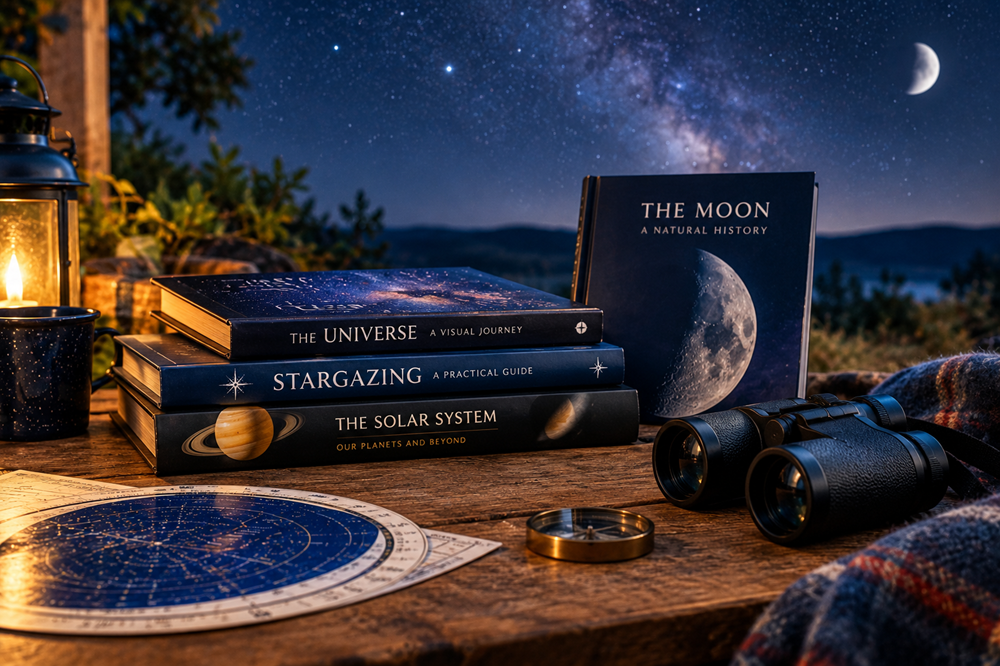
If you are unsure what astronomy equipment someone already owns, a book can be a much safer choice.
Unlike many telescope accessories, books do not depend on having a particular telescope, camera, mount or eyepiece. They can also suit a wide range of interests and experience levels.
The important thing is to choose a book that matches the person’s interests rather than simply picking the first astronomy title you find.
For example, a beginner may enjoy an accessible introduction to astronomy, while an experienced enthusiast might prefer a book about astrophotography, deep-sky observing, space exploration or a particular area of astronomy they already enjoy.
Books can also work well for people who love space but do not regularly observe the night sky. A beautifully illustrated or well-written book can be enjoyed at home without requiring any specialist equipment.
If you know what they enjoy but are unsure what equipment they need, a well-chosen astronomy book can be one of the safest gifts you can buy.
8. What NOT to Buy Without Checking First
Some astronomy gifts are much harder to choose than they might appear.
If the recipient already owns a telescope, camera or other astronomy equipment, it can be tempting to buy an accessory that seems useful. The problem is that many specialist accessories are designed to work with particular types of equipment.
Before buying anything that needs to connect to or work with existing equipment, check what the recipient already owns.
Be Careful With Specialist Accessories
This is particularly important with items such as:
- telescope eyepieces
- filters
- smartphone or camera adapters
- telescope mounts
- astrophotography accessories
- camera lenses
- cables and other equipment-specific accessories
Two products can look very similar but have completely different specifications or connections.
Ask Before You Buy
If you know the recipient well enough, asking a few questions can save you from making an expensive mistake.
You could ask what telescope or camera they use, what accessories they already have, or whether there is something they have been thinking about buying.
If you want the purchase to remain a surprise, you could also ask someone who knows their astronomy setup.
When In Doubt, Choose Something Less Specific
If you cannot find out what equipment they use, there is nothing wrong with choosing a gift that does not depend on compatibility.
A suitable astronomy book, general-purpose gift or something related to their other interests may be a much safer choice.
A specialist astronomy accessory is only a good gift if it is suitable for the equipment it is intended to be used with. When you cannot check that, it is usually better not to guess.
9. How to Choose an Astronomy Gift Online
Once you have worked out what type of gift is likely to suit the person, buying online can make it much easier to compare your options.
However, don’t rely on a product’s photographs or headline description alone. A few simple checks can help you avoid buying something that looks good but isn’t quite right.
Check the Reviews
Look beyond the overall star rating and read some recent reviews.
Pay particular attention to comments about build quality, ease of use, reliability and whether the product works as described. If the gift is intended for a child or beginner, reviews can also give you an idea of how easy it is to use.
Check the Specifications
Make sure you understand the important specifications before buying.
For astronomy equipment, this could include dimensions, weight, optical specifications, connections or compatibility. For a book or decorative gift, size, materials and what is included may be more relevant.
Check Compatibility
If the product needs to work with equipment the recipient already owns, check compatibility carefully before ordering.
Don’t assume that two products will work together simply because they are both described as being suitable for astronomy or astrophotography.
Check What’s Included
Look carefully at the product description to see exactly what you are buying.
Some products shown in photographs may be pictured with accessories that are not included in the price.
Think About Size and Practicality
A product may be excellent on paper but unsuitable if it is too large, heavy or awkward for the recipient to use or store.
This is particularly worth considering with telescopes, tripods and other larger equipment.
Check Returns and Delivery
Before ordering, check the seller’s returns policy and make sure the expected delivery date is suitable for the occasion.
This is especially important if you are buying a gift close to Christmas or a birthday.
10. The Best Astronomy Gift Is the One They’ll Actually Use

It can be tempting to choose the most impressive-looking astronomy gift, especially if it has a long list of features or a high price tag.
But the best gift is usually the one that fits the person’s interests, experience and circumstances.
A simple gift that they use regularly is likely to bring more enjoyment than an expensive product that is difficult to use, unsuitable for their equipment or simply not what they wanted.
Before making your final choice, ask yourself:
Is this something the person is likely to enjoy and use — or does it only look like a good astronomy gift?
If the answer is clear, you’re probably on the right track.
Choose the gift for the person, not just for the hobby.
11. A Quick Decision Guide
Before choosing an astronomy gift, run through these questions:
Do They Enjoy Observing the Night Sky?
If they regularly observe from the garden, balcony or darker-sky locations, consider a gift that supports their observing.
If they mainly enjoy astronomy indoors, a book, model, artwork or other space-related gift may be more suitable.
Are They Interested in Astrophotography?
If they enjoy photographing the night sky, be careful with specialist equipment.
Cameras, lenses, mounts, adapters and other accessories may need to match the equipment they already own. Check compatibility before buying.
Are They New to Astronomy?
For a beginner, choose something approachable and easy to enjoy.
Avoid assuming that a telescope or complicated accessory is automatically the best starting point.
Are They Already Experienced?
An experienced astronomer may already own much of the equipment they need and may have strong preferences about brands or specifications.
If you are unsure what they want, ask discreetly or choose something that does not depend on their existing setup.
Do You Know What They Already Own?
If you know their equipment, you may be able to choose a useful accessory.
If you do not, avoid guessing. A book, general-purpose gift or gift voucher may be a safer option.
Are You Still Unsure?
If you cannot confidently match a product to the person, step back and think about the experience you want the gift to provide.
Something educational, practical, decorative or simply enjoyable may be a better choice than specialist equipment.
12. Explore Our Astronomy Gift Guides
Once you have thought about the person’s interests, experience and circumstances, our astronomy gift guides can help you explore specific ideas.
Best Gifts for Astronomy Lovers
Our main gift guide brings together astronomy gift ideas for different budgets, interests and types of recipient.
It is a useful place to start if you want to compare specific products and find inspiration for your next astronomy gift.
Astronomy Books
If the person enjoys learning about space, reading about the universe or exploring astronomy from home, our astronomy book guides can help you find a suitable title.
Moon Lamps and Space-Themed Gifts
For someone who loves space but may not regularly observe the night sky, a Moon lamp or another space-themed gift could be a better fit than specialist astronomy equipment.
Space Crafts and Gifts for Children
If you are buying for a child, our guides to space crafts and astronomy-related gifts for children can help you find ideas that are engaging, age-appropriate and fun.
Explore More Astronomy Gift Ideas
Visit our Gifts & Books hub to explore all our astronomy gift guides, book recommendations and space-related gift ideas.
The aim is to choose a gift that suits the person — and our guides can help you find the right option once you know what you are looking for.
Frequently Asked Questions
For a complete beginner, look for something simple, approachable and easy to enjoy. An astronomy book, planisphere, binoculars or another gift that helps them explore the night sky can be a good starting point. Avoid buying complicated specialist equipment unless you know they are ready for it.
A telescope can be a wonderful gift, but it is not automatically the best choice for someone who loves astronomy. Before buying one, consider their experience, where they would use it, what they would like to observe and whether they already own a telescope or binoculars. If you are unsure, a less specialised gift may be a safer choice.
Books, decorative space-related gifts and other items that do not depend on existing equipment are generally safer choices. Specialist accessories such as eyepieces, filters, adapters and mounts may need to be compatible with the recipient's existing setup, so avoid guessing if you cannot check.
Experienced astronomers can be difficult to buy for because they may already own the equipment they need and have particular preferences about brands and specifications. If you know what they use, you may be able to choose a suitable accessory. Otherwise, consider a good astronomy book, a practical observing gift or a gift voucher.
There is no set amount you need to spend. A thoughtful astronomy gift can cost relatively little, while specialist equipment can run into hundreds of pounds or more. Start with a comfortable budget and choose something that suits the person's interests rather than feeling you have to spend the full amount.
Final Thoughts
Choosing the perfect astronomy gift does not have to mean finding the most expensive or technically advanced product.
Start by thinking about the person. Consider what part of astronomy they enjoy, how experienced they are, what equipment they already own and whether they prefer practical, educational or decorative gifts.
If you are unsure about specialist equipment, it is usually better to ask a few questions or choose something that does not depend on compatibility.
The most thoughtful gift is one that fits the person’s interests and circumstances — and that they will genuinely enjoy using.
Once you have worked out what type of gift is likely to suit them, explore our astronomy gift guides for specific ideas and recommendations.