Connecting a camera to a telescope can significantly improve night-sky photography. This is where a telescope camera adapter comes into play. These simple attachments help marry the precision of telescopes with the versatile capabilities of your camera.
A telescope camera adapter is made to fit between a telescope’s eyepiece and your camera’s lens mount. It essentially allows the telescope to function as a colossal lens, providing magnification and clarity that’s hard to achieve with standard cameras alone.
This setup means you can focus directly on celestial objects like the moon and planets, or deep sky objects like star clusters and even distant galaxies with incredible detail.
How A Telescope And Camera Are Attached
Attaching a DSLR (or Mirrorless) camera to a telescope is done via the T-mount system.
The T-mount system is a standardised lens mount system originally developed by Tamron in the 1950s-1960s. They devised the system to sell their lenses to fit other makes of camera bodies.
It allows lenses, telescopes, or other optical devices to be attached to cameras using a simple and versatile mechanism. Here’s how it works:
System Components:
The system consists of four main parts:
- A camera.
- A T-Ring: The T-Ring is the object which fits into your brand-name camera on one side and has female T-Threads on the other side.
- A T-Adapter: This connects the telescope or lens to the camera using male T-threads.
- A lens or telescope.
T-Threads Explained: The system uses metric T-threads, typically 42mm in diameter with a 0.75mm thread pitch. When screwed together, the matching threads on the T-Ring and T-Adapter allow a camera to be rigidly mounted to a lens or a telescope.
Compatibility: T-Rings are designed to fit specific camera brands, such as Canon or Nikon. T-Adapters are tailored to different telescope types, such as Schmidt-Cassegrain, Refractors and Edge HD telescopes.
You can use T-Adapters on Reflector telescopes, but it may require a more complex setup.
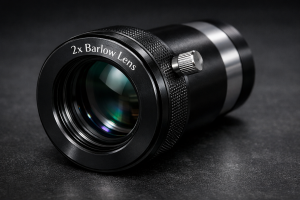
Reflector telescopes often have limited back focus, meaning the camera may not reach proper focus without adjustments. You might need a low-profile focuser or a Barlow lens to extend the focus point.
Picking An Adapter – What to look out for
When picking an adapter, certain features stand out. Look for models with secure attachment mechanisms to prevent unwanted camera movement, and consider ones with built-in rings for better stabilization. The material used can also affect durability and weight, both crucial during long photo sessions.
There are adapters designed for various camera models and telescope types. Some adapters are universal, while others might be brand-specific, making it essential to check compatibility before purchasing.
For instance, a Canon user might need a different adapter compared to someone using a Nikon or Sony camera.
Potential Challenges
Challenges can arise, like ensuring the adapter fits snugly or managing the additional weight your equipment will carry. Proper setup is essential to avoid blurry images, and balancing the equipment to prevent tipping is important too.
However, with the right know-how and practice, these hurdles become minor detours in the exciting road of astrophotography.
Note: This post contains affiliate links. If you buy through these links, I may earn a small commission at no extra cost to you. As an Amazon Associate, I earn from qualifying purchases.
Highly Rated T-Rings & Adapters (For DSLR/SLR Cameras)
Svbony T-Ring & Adapter
Svbony have produced a T-Ring and Adapter combination which has proved to be a popular choice for astrophotography enthusiasts.
This T-ring/Adapter combination comes in two varieties and allows seamless connection between your Canon or Nikon camera to a telescope with standard 1.25-inch eyepiece port.
Compatible With Canon
No products found.
Compatible With Nikon
No products found.
Starboosa T-Ring & Adapter
The Starboosa T-Ring & Adapter combination is designed for astrophotography, allowing DSLR cameras to connect to telescopes for prime-focus or eyepiece-projection photography.
The two combination varieties available are compatible with Canon or Nikon SLR cameras, but not mirrorless models.
Compatible With Canon

Compatible With Nikon

Celestron T-Ring & Adapter
The Celestron T-Adapter is a popular choice among astrophotography enthusiasts. It allows you to connect your DSLR or SLR camera to a telescope for prime focus photography, effectively turning your telescope into a powerful lens.
No products found.
Highly Rated T-Rings & Adapters (For Mirrorless Cameras)
Celestron 93419 T-Ring for Canon EOS Digital Cameras
Compatible With Canon


Celestron 93402 T-Ring For Nikon Digital Cameras
Compatible With Nikon

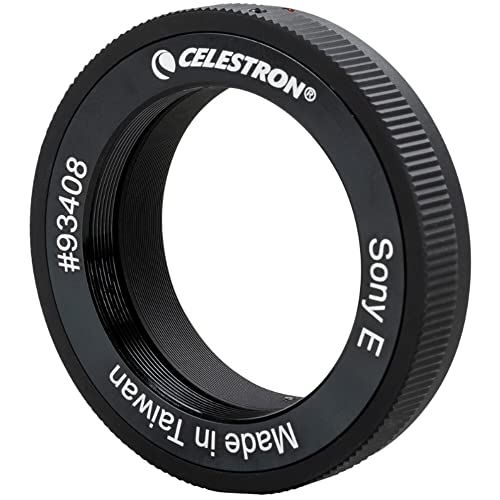
Celestron 93408 T-Ring for Sony E-Mount Cameras
Compatible With Sony
Celestron 93625 1.25 Inch Universal T-Adapter

Enhancing Night-Sky Photography: Techniques and Tips
Photography among the stars comes with its own set of challenges and rewards. Setting up for a successful astrophotography session requires a bit of preparation, starting right from your equipment.
Ensuring that your telescope, camera, and adapter are all securely connected is crucial to avoid those annoying wobbles that can ruin a perfect shot.
Optimal settings can vary with different celestial events, so familiarizing yourself with your camera’s manual settings is a smart move.
Adjusting ISO settings to manage light sensitivity and playing around with exposure to capture details without overexposure are vital steps. Each tweak can significantly affect the clarity and detail of your photos.
Techniques, like using a remote shutter or self-timer, help eliminate vibrations caused by pressing the camera’s button. Such strategies are simple yet effective for clearer images.
Additionally, time-lapse photography can create stunning sequences that capture the movement of stars, adding an extra touch of drama to your collection.
Astrophotography isn’t about instant success; it’s about patience and experimentation. Spending some time trying different angles, settings, and techniques can lead to discovering the best methods that work for you.
Practicing under various conditions lets you get a feel for how elements like weather and light pollution affect your photos.
Using apps or computer software to plan your sessions can give you a head start. Some programs can help predict celestial events or provide star maps, assisting in deciding where to focus.
With these preparations and tips in your arsenal, capturing breath-taking night-sky photos can become a rewarding and enjoyable hobby.
Want more tips for stunning night sky shots? Check out our guide: Astronomy Photography Tips: Capturing The Cosmos