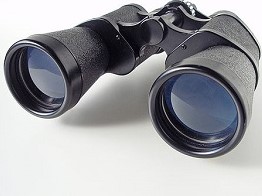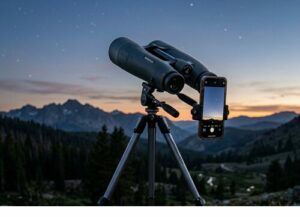
Capturing what you see through binoculars with your smartphone sounds simple — until you try it.
Binocular eyepieces, narrow eye relief, and balance issues make smartphone photography far trickier than it is with telescopes.
Many adapters designed for telescope eyepieces simply don’t work well with binoculars, leading to shaky images, frustrating alignment, and wasted time under the stars.
In this guide, we’ll cover the best smartphone adapters specifically suited for binocular use, explain what to look for, and highlight highly rated adapters that work well for astronomy, birding, and general outdoor use.
Note: This post contains affiliate links. If you buy through these links, I may earn a small commission at no extra cost to you. As an Amazon Associate, I earn from qualifying purchases.
Quick Verdict (Best Smartphone Adapters for Binoculars)
- Best overall: Celestron NexYZ — unmatched alignment precision for binocular astronomy
- Best premium: Celestron NexYZ DX — stronger build for large phones and heavier setups
- Best beginner option: SOLOMARK Cell Phone Adapter — simple, affordable, and easy to use
- Best budget metal build: Apexel Universal Adapter — solid stability at a lower price
Smartphone Adapter Comparison Table (Best for Binoculars)
| Adapter | Best For | Build Quality | Phone Size Support | Alignment Ease | Tripod Friendly | Verdict |
|---|---|---|---|---|---|---|
| Celestron NexYZ | Binocular astronomy | Very solid (mixed metal) | Small to large phones | ⭐⭐⭐⭐⭐ | Yes | Best overall choice |
| Celestron NexYZ DX | Heavy phones & frequent use | Full metal frame | Large & heavy phones | ⭐⭐⭐⭐⭐ | Yes | Best premium option |
| SOLOMARK Cell Phone Adapter | Beginners & casual use | Plastic (lightweight) | Most smartphones | ⭐⭐⭐⭐ | Yes | Best beginner pick |
| Apexel Universal (Metal) | Budget buyers | Metal frame | Most smartphones | ⭐⭐⭐⭐ | Yes | Best budget metal build |
All of the adapters above are compatible with standard binocular eyepieces and are readily available from Amazon UK.
Why Smartphone Adapters for Binoculars Are Different
Binocular smartphone adapters face unique challenges that telescope adapters don’t:
- Shorter eye relief makes precise alignment critical
- Dual barrels require careful positioning over a single eyepiece
- Balance issues are more noticeable due to lighter optics
- Tripod use is often essential for sharp results
Because of this, binocular users benefit most from adapters that are:
- Lightweight but rigid
- Quick to align
- Compatible with a wide range of eyepiece diameters
If you’re mounting a phone to a telescope eyepiece instead, see our guide to the best smartphone telescope adapters.
What to Look for in a Binocular Smartphone Adapter
Before buying, make sure an adapter offers the following:
✔ Secure Phone Grip
A strong clamp prevents drift during long exposures — especially important for lunar and planetary shots.
✔ Wide Eyepiece Compatibility
Look for adapters that support 28–50mm eyepiece diameters, common on most astronomy and birding binoculars.
✔ Easy Alignment
Adapters with fine adjustment or sliding rails make centring the camera lens far less frustrating.
✔ Tripod-Friendly Design
Using a tripod dramatically improves image sharpness and makes framing far easier.
Best Smartphone Adapters for Binoculars (Highly Rated Picks)
Below are four excellent smartphone adapters that consistently perform well with binoculars and receive strong reviews from users.
Celestron NexYZ Smartphone Adapter
Best for: Binocular astronomy & precise alignment

The Celestron NexYZ is one of the most precise smartphone adapters available and works exceptionally well with binoculars thanks to its three-axis adjustment system.
Instead of forcing you to reposition the phone repeatedly, the NexYZ allows fine control in the X, Y, and Z directions — making it much easier to align your phone’s camera lens with a binocular eyepiece.
It supports a wide range of eyepiece sizes and large smartphones, making it a favourite among astronomy enthusiasts.
Why it works well with binoculars:
- Extremely precise alignment
- Solid construction with minimal flex
- Excellent for lunar and planetary shots
Celestron NexYZ DX Smartphone Adapter
Best for: Large phones & premium binocular setups

The NexYZ DX builds on the standard NexYZ with a stronger metal frame and improved phone grip, making it the better option for heavier smartphones or frequent use.
If you’re using larger binoculars or regularly swapping phones in and out, the DX version feels noticeably more rigid and confidence-inspiring.
Alignment works the same way, but there’s less flex — which helps when shooting video or taking multiple images in one session.
It’s more expensive than the standard NexYZ, but for serious binocular astrophotography it’s a worthwhile upgrade.
Why it’s excellent for binoculars:
- Extra rigidity for heavy phones
- Same excellent alignment controls
- Better long-term durability
SOLOMARK Cell Phone Adapter
Best for: Simple setups & first-time binocular users

The SOLOMARK Cell Phone Adapter is a straightforward, no-nonsense option that works well with binoculars — especially for beginners who don’t want to wrestle with complicated alignment systems.
It uses a spring-loaded clamp to hold most smartphones securely and fits a wide range of binocular eyepiece diameters.
While it lacks fine three-axis adjustment, it’s easy to position and stays put once aligned, making it ideal for quick Moon shots and daytime wildlife photography.
For users testing binocular smartphone photography for the first time, the SOLOMARK adapter strikes a good balance between price, stability, and ease of use.
Why it’s excellent for binoculars:
- Beginner-friendly and easy to use
- Compatible with most binocular eyepieces
- Lightweight and portable
Apexel Universal Smartphone Adapter (Metal Frame Version)
Best for: Budget buyers who still want stability
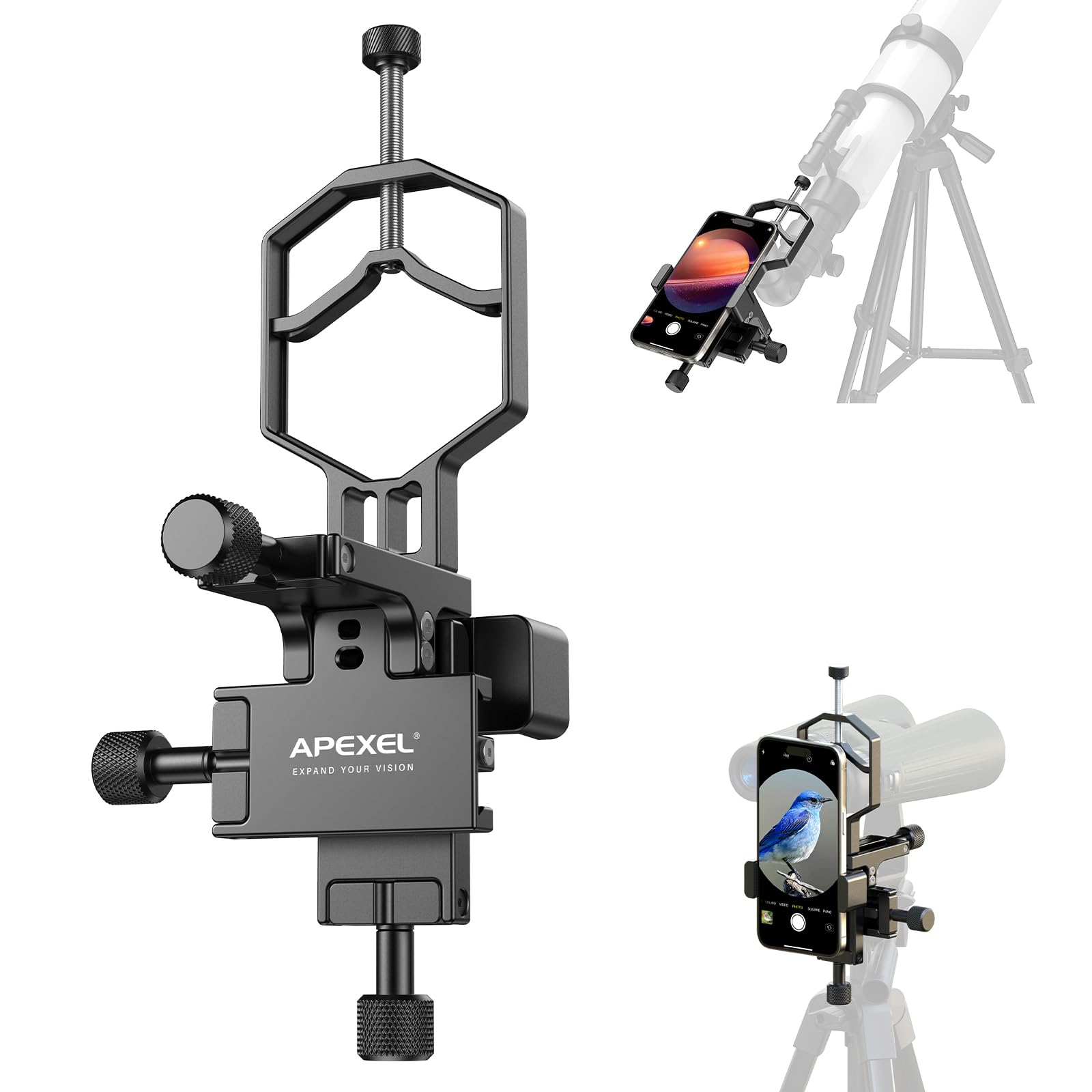
If you’re looking for a more affordable binocular smartphone adapter without dropping into flimsy plastic territory, the metal-frame Apexel adapter is a strong option.
It offers a solid clamp, decent phone grip, and good compatibility with common binocular eyepiece sizes. While alignment isn’t as refined as premium adapters, it’s more than capable for Moon shots, bright stars, and daytime use.
This is a sensible entry-level choice for beginners testing the waters.
Why it’s excellent for binoculars:
- Metal construction at a lower price point
- Stable enough for tripod use
- Good value for beginners
NexYZ vs NexYZ DX — Which Should You Choose?
Choose the NexYZ if:
- You want maximum precision at a lower cost
- Your phone is average size
- You mainly shoot photos
Choose the NexYZ DX if:
- You use a large or heavy phone
- You want extra rigidity
- You shoot video or observe frequently
Can You Use Telescope Smartphone Adapters on Binoculars?
Sometimes — but it’s not ideal.
Telescope adapters are usually designed for:
- Longer eye relief
- Larger eyepiece housings
- Heavier optical tubes
They often work better on telescopes than binoculars. For consistent results, a binocular-friendly adapter is the safer choice.
Final Verdict
Smartphone photography through binoculars is absolutely achievable — but only with the right adapter. Binocular eyepieces demand better alignment, balance, and stability than most generic phone mounts can offer.
For most users, the Celestron NexYZ stands out as the best all-round choice. Its precise three-axis adjustment makes aligning a smartphone with a binocular eyepiece far less frustrating, especially for lunar and planetary viewing.
If you’re using a larger phone or want a more rugged setup for regular use, the Celestron NexYZ DX offers the same excellent alignment with added rigidity and durability.
Beginners who want something simple and affordable will find the SOLOMARK Cell Phone Adapter an easy entry point, while budget-conscious buyers looking for a sturdier build should consider the Apexel Universal Adapter (Metal Frame).
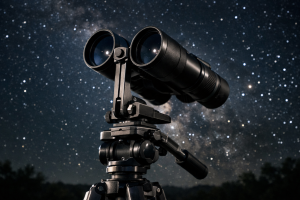
Whichever adapter you choose, pairing it with tripod-mounted binoculars will dramatically improve image sharpness and ease of use — particularly for astronomy.
Frequently Asked Questions
Yes. The Moon is the easiest target and produces surprisingly good results when using a stable adapter and tripod.
Most standard binoculars do, but compact or rubber-armoured eyepieces may be more difficult to clamp securely.
Absolutely — while you won’t capture deep-sky detail, Moon shots, star fields, and bright planets are very achievable.