After decades of distant lunar surveys and brief visits, humanity is preparing for a meaningful return to the Moon. NASA’s Artemis lunar observation programme — powered by the Orion spacecraft — goes far beyond simply landing astronauts.
It’s about changing how we study, observe, and understand the Moon.
For scientists, educators, and amateur astronomers alike, Artemis offers new data, better perspectives, and fresh ways to connect observations from Earth with direct measurements from lunar orbit and the surface.
Understanding Artemis and Orion
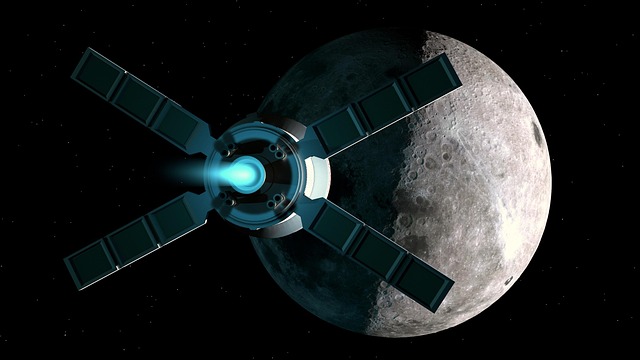
Artemis is NASA’s programme for returning humans to the Moon and developing the systems needed for longer-term lunar exploration.
The Orion spacecraft carries astronauts on missions beyond low Earth orbit, while the Space Launch System (SLS) provides the rocket power needed to send Orion toward the Moon.
For lunar observation, the importance of Artemis goes beyond human spaceflight. The missions are also helping develop new ways to study the Moon, collect scientific data, and understand its surface and environment.
Several Artemis missions have now taken place or are planned for the coming years. Here’s a look at the key missions and what each one is designed to achieve.
Artemis I (Launched November 2022)
- Type: Uncrewed lunar orbital test
- Purpose: Tested the SLS rocket, Orion spacecraft and associated systems in deep space before crewed missions.
- Highlights:
- Spent 25 days in space, including time in lunar orbit.
- Travelled about 1.4 million miles (2.3 million kilometres).
- Successfully demonstrated Orion’s ability to travel around the Moon and return safely to Earth.
Artemis II (Launched April 2026)
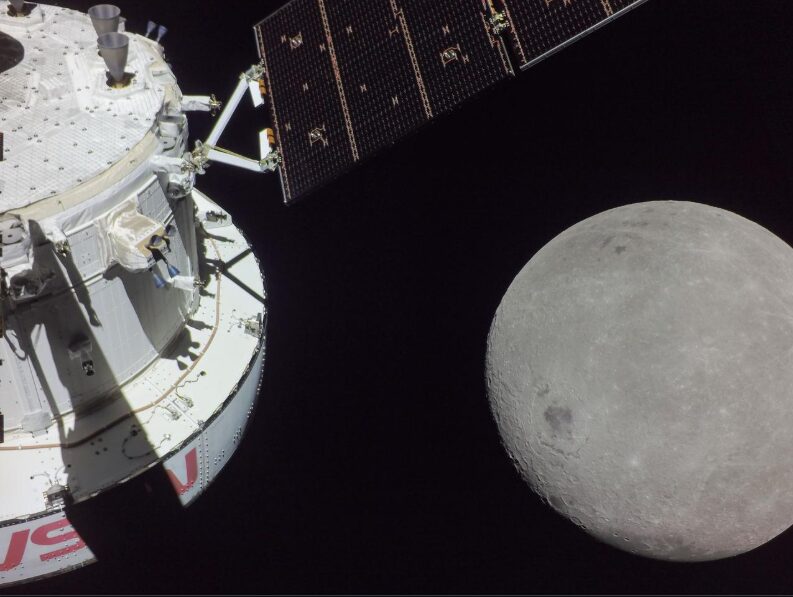
- Type: Crewed lunar flyby
- Crew: 4 astronauts
- Purpose: Tested Orion and its systems with astronauts aboard during a journey around the Moon and back to Earth.
- Highlights:
- Completed a nearly 10-day mission.
- Marked the first crewed Artemis flight.
- Provided valuable experience and data for future crewed lunar missions.
Artemis III (Planned for 2027)
- Type: Crewed demonstration mission in low Earth orbit
- Crew: 4 astronauts
- Purpose: Test rendezvous and docking operations between Orion and commercial lunar-lander systems.
- Highlights:
- Will test important systems and procedures needed for future lunar landings.
- The mission is designed to help prepare for Artemis IV, rather than landing astronauts on the Moon itself.
Artemis IV (Targeted for early 2028)
- Type: Planned crewed lunar mission
- Purpose: NASA currently plans Artemis IV as the first Artemis mission to land astronauts on the Moon.
- Highlights:
- The crew is expected to travel to lunar orbit aboard Orion.
- Astronauts are planned to transfer to a commercial lunar lander for descent to the surface.
- The mission is intended to target the lunar South Pole.
Together, these missions represent a gradual progression from testing spacecraft and systems to crewed lunar exploration. They will also provide new opportunities to study the Moon in greater detail and improve our understanding of its surface and environment.
New Tools and Data for Observing the Moon
High-resolution orbital mapping
Artemis missions and associated lunar science instruments will add new data about the Moon’s surface, minerals and subsurface environment.
This information can complement existing lunar maps and observations, helping scientists build a more detailed picture of how different regions of the Moon formed and changed.
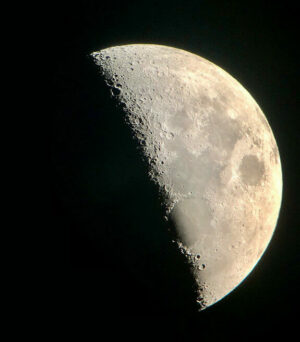
Amateur observers can use publicly available mission imagery and scientific data to complement their own observations — for example, by using telescopes or binoculars to study lunar craters and other surface features.
Tracking Lunar Changes Over Time
As Artemis and other lunar missions collect measurements over time, scientists can build a better picture of how the Moon’s surface and environment change.
They’ll be able to study short-lived flashes or “transient lunar phenomena,” temperature shifts between lunar day and night, and even how dust and rocks move after tiny meteoroid impacts.
By combining Artemis data with telescope observations from Earth, researchers can build a much more complete picture of how the Moon evolves.
New Spectroscopic and Radar Data
New instruments on lunar landers and other Artemis-related missions will help scientists study both the Moon’s surface and what lies beneath it.
Spectrometers will show which minerals and volatiles, such as water ice, are present, while radar systems will reveal hidden layers beneath the regolith.
This will help scientists investigate possible water ice in permanently shadowed regions and improve our understanding of the Moon’s geology and history.
Faster Communication and Data Sharing
Artemis II also demonstrated a new approach to communicating with spacecraft in deep space. Its laser communications system transmitted more than 484 GB of data between Orion and Earth during the mission, including high-resolution images.
NASA is also developing lunar communications and navigation relay systems that could provide more reliable connections between Earth and missions operating around the Moon, including areas where the Moon blocks a direct line of sight.
For lunar science, faster and more reliable communications could mean that researchers receive important images and measurements sooner, making it easier to respond to events and coordinate observations.
How Lunar Science Will Benefit
- Better landing site selection: High-resolution imagery and surface data will help identify safe and scientifically interesting landing sites.
- Understanding lunar activity: Long-term monitoring will reveal how dust, rocks, and gases behave under sunlight and impacts.
- Mapping resources: Improved spectroscopy and radar will refine maps of minerals and potential resources — valuable for both research and future missions.
What Amateur Astronomers and Educators Can Expect
- Richer context for observations: Amateur observations can be compared with data from lunar missions to help scientists investigate unusual events and changes on the Moon.
- Citizen science opportunities: Artemis-era lunar exploration is creating opportunities for amateur astronomers to contribute to genuine research. For example, NASA’s Impact Flash project asks observers with suitable telescopes and video equipment to record possible meteoroid impacts on the Moon.
- More ways to participate: Amateur astronomers may also be able to take part in selected tracking and observation projects connected with lunar missions, giving them opportunities to contribute observations beyond traditional backyard stargazing.
Real-World Examples of Lunar Collaboration
- Tracking lunar impact flashes: During Artemis II, astronauts watched for flashes produced when meteoroids struck the lunar surface while amateur astronomers on Earth recorded the Moon with their own telescopes. Observations from different locations can help scientists learn more about these impacts and the craters they produce.
- Comparing lunar observations: Images and observations made from Earth can provide a useful complement to spacecraft observations, helping researchers study the same lunar features from different perspectives.
- Following lunar exploration: Publicly available mission information and scientific data can give amateur astronomers, astronomy clubs and educators better context for understanding what they see when observing the Moon.
Technology Advancing Lunar Observation
Artemis is also driving the development and demonstration of new technologies for observing and studying the Moon. These include compact scientific instruments, advanced imaging systems and higher-capacity communications.
Some of these technologies are designed specifically for spacecraft and lunar operations, so they won’t necessarily become consumer astronomy equipment. The wider development of smaller, more capable sensors and faster ways of transmitting scientific data could benefit lunar research well beyond individual Artemis missions.
The Challenges Ahead
- Access to data: Some Artemis data might not be released right away, as it will first be used for mission planning. This could temporarily limit public participation.
- Increased lunar traffic: More spacecraft near the Moon means greater need for coordination to avoid interference and ensure smooth communication.
- False signals: Human activity could create reflections or flashes that look like natural lunar events. Careful data comparison will be needed to tell them apart.
Building a Collaborative Lunar Observation Future
Artemis and Orion are not replacing Earth-based observation — they are enhancing it. The greatest progress will come from collaboration: amateur astronomers providing wide-area monitoring, while Artemis missions deliver close-up data.
Together, they can create a global network that links classrooms, observatories, and missions in one shared effort to study the Moon.
The Artemis programme marks the beginning of a new era in lunar observation — one with richer data, faster communication, and unprecedented cooperation.
Whether you’re a scientist, student, or casual sky-watcher, Artemis opens the door to explore our closest neighbour in ways we’ve only dreamed of before.
You can see and read more on the Artemis programme at the NASA website